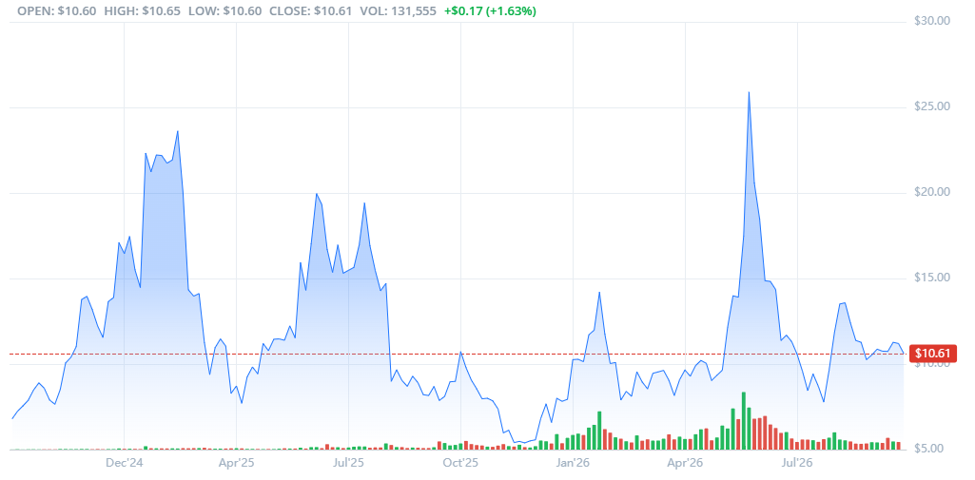
has headwinds in 2026, but they’ve been priced into the market.
Down nearly 65% from the late 2025 highs, this market is trading at deep-value levels, with catalysts in play. While the guidance for fiscal 2027 was tepid, it reflects intentional price markdowns, aimed at driving volume.
Initial test results were favorable, with a 22% price reduction in a flagship product resulting in more than 35% volume growth across retailers. The likely outcome is that e.l.f.’s tepid guidance will be overshadowed, reinvigorating market appetite for the stock and catalyzing a rebound that could add a high-double-digit amount to the stock price.
e.l.f.’s Downside Is Limited in 2026
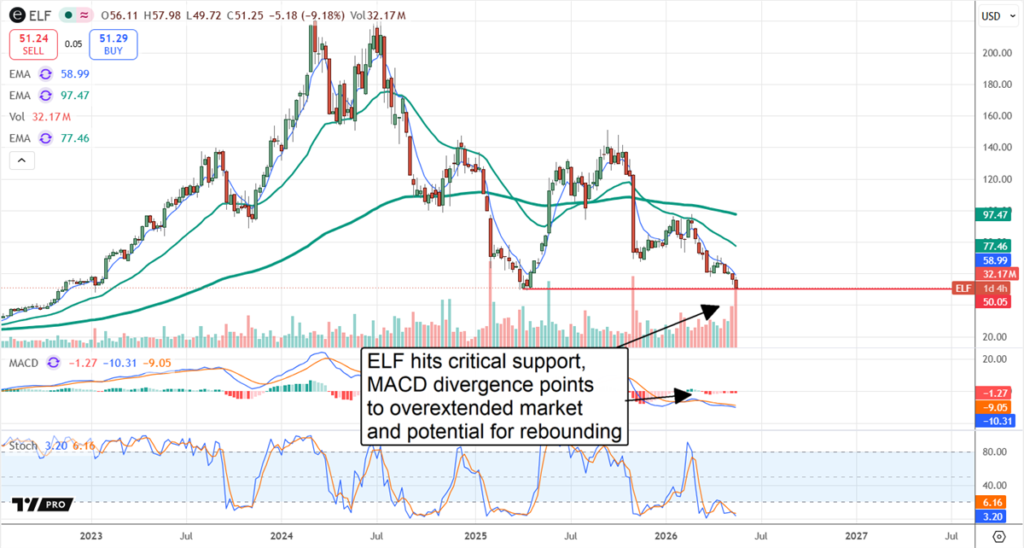
e.l.f. Beauty is not out of the weeds; its stock price may continue to trend lower and even set a new long-term low. However, the downside appears to be limited due to technical, analyst, and institutional factors. Technically, the market is trading just above a critical support target set last year. The indicators are bearish, but suggest bulls are regaining control, with the stochastic deeply oversold and MACD diverging. The MACD divergence is the operational factor, as it indicates a shift in market dynamics and potential for a rebound.
 The potential for a rebound is reflected in analyst sentiment trends. Analysts lowered their price targets over the trailing 12 months, but the market outran the trend, falling well below the consensus figure. As it stands, e.l.f.’s low-end target aligns with the critical support target, strengthening the market floor, and the consensus forecasts 70% upside for this Moderate Buy-rated stock.
Institutional activity has been mixed on a trailing 12-month basis, with the balance relatively flat despite quarter-to-quarter shifts in the dynamic. The critical detail is that they show a high conviction in the long-term outlook, owning approximately 95% of the shares.
e.l.f. Steadies After Hot Report, Tepid Guidance
e.l.f. Beauty had a solid quarter in fiscal Q4 2026, sustaining its trend of growth and market share gains. The company reported $449.3 million in net revenue, up 35% year-over-year and 600 basis points (bps) better than MarketBeat’s reported consensus. Strength was reported across brands and channels, with gross margin expanding due to pricing.
Looking ahead, the company’s margin will likely contract given the planned item markdowns; however, the expected increase in sales volume should offset the impact on a dollar basis. The question is how quickly the changes will produce results and whether volume gains will align with the test results.
Margin news was a mixed bag but ultimately favorable to investors. The company widened its gross margin on pricing, revenue leverage, and operational quality, offset by tariff expense, and managed to control SG&A. SG&A expenses more than doubled due to increased advertising, marketing, and distribution costs, with the first two expected to drive sales in upcoming quarters.
The guidance suggests this market has reached its bottom. The company’s guidance came in below consensus estimates but still triggered a rebound in the stock price. The rebound reveals a market that feared the worst and one ready to begin working on a reversal. Although guidance was below consensus, the company forecasted growth, and catalysts are in the works that could accelerate and drive outperformance.
The balance sheet highlights suggest a reversal will gain traction in the upcoming quarters. The financials are affected by the rhode acquisition, including a 3X increase in debt, but the cash flow-positive business supported cash and asset increases in excess of liabilities increases, leaving the equity up on a full-year basis. The likely outcome is that e.l.f. whittles down the debt over the subsequent quarters, improving shareholder equity and market sentiment.
e.l.f.’s biggest risks this year include the impact of higher fuel costs and slowing growth in the core brand. Fuel costs are impacting the results and may not be fully reflected in the guidance, as indicated by CFO Mandy Fields. The risk is that gas prices remain elevated or increase, further impairing profitability. Slowing growth is tied to price increases and may be reversed by the planned price rationalization. Catalysts include the multi-brand strategy, strength in rhode and Naturium lines, and international expansion. The international segment is less than 25% of the business, is growing faster than the core, and is on track to expand by several hundred basis points. Key markets include the UK, Germany, and Australia.
5 Stocks Our Experts Predict Could Double In the Next Year
By submitting your email, you'll also get a free pivot & flow membership. A free daily market overview. You can unsubscribe at any time.