The AI-driven earnings story remains one of the strongest themes in global markets, but maintaining the recent pace of earnings upgrades will become progressively more difficult.
Takeaways
• The rally has been powered primarily by earnings growth, not valuation expansion, a distinction that makes the advance more fundamentally durable than many assume.
• Investor enthusiasm is clearly building, with options activity, leveraged ETF flows, and hedge fund exposure all pointing to a market that is becoming increasingly crowded.
• The AI-driven earnings story remains one of the strongest themes in global markets, but maintaining the recent pace of earnings upgrades will become progressively more difficult.
• Markets can certainly move higher from here, but the easy gains generated by improving sentiment and positioning adjustments have likely already been captured.
• As summer approaches and liquidity thins, disciplined risk management may prove just as important as identifying the next opportunity.
Goldman Says the Next Leg Will Be Harder
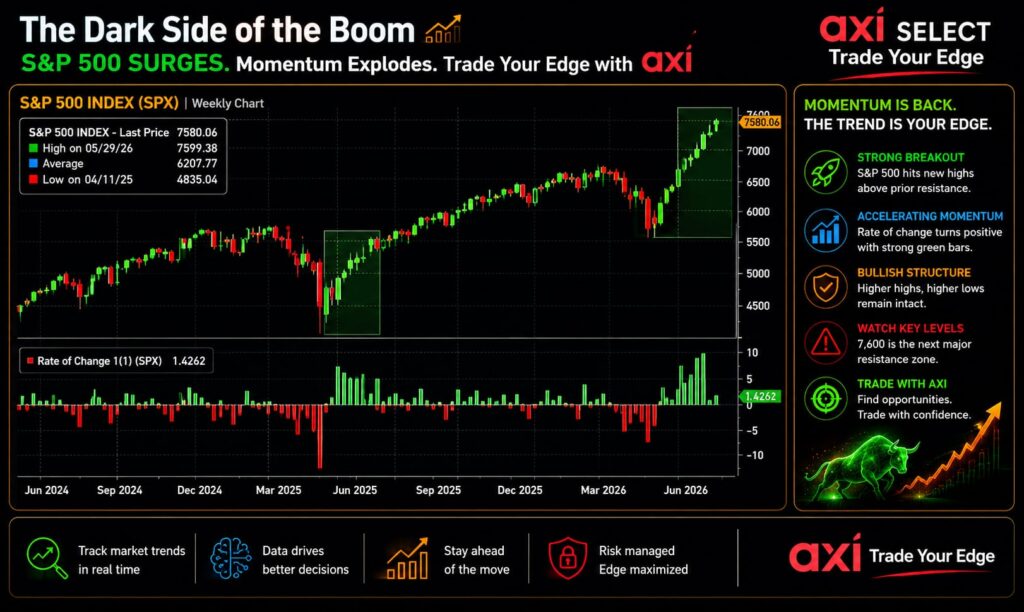
The has now marched higher for nine consecutive weeks, effectively climbing every week since the ceasefire was first announced. Markets have spent the past two months steadily pricing out the Middle East disaster scenario, replacing fears of a prolonged energy shock with growing confidence that the conflict is moving toward a manageable resolution. Whether that optimism ultimately proves justified remains to be seen, but for now investors are treating a smaller left-tail risk as good enough reason to keep buying.
Yet beneath the surface of the rally, Goldman Sachs’ Tony Pasquariello argues that investors may be asking the wrong question. Much of the debate has centred on whether stocks have become overextended, whether markets are underestimating geopolitical risk, whether fiscal stimulus has artificially boosted growth, or whether positioning started the year too defensively. While each argument contains some truth, Goldman believes the bigger story has been far simpler.
Corporate America continues to deliver extraordinary earnings.
I threw this in to connect the dots
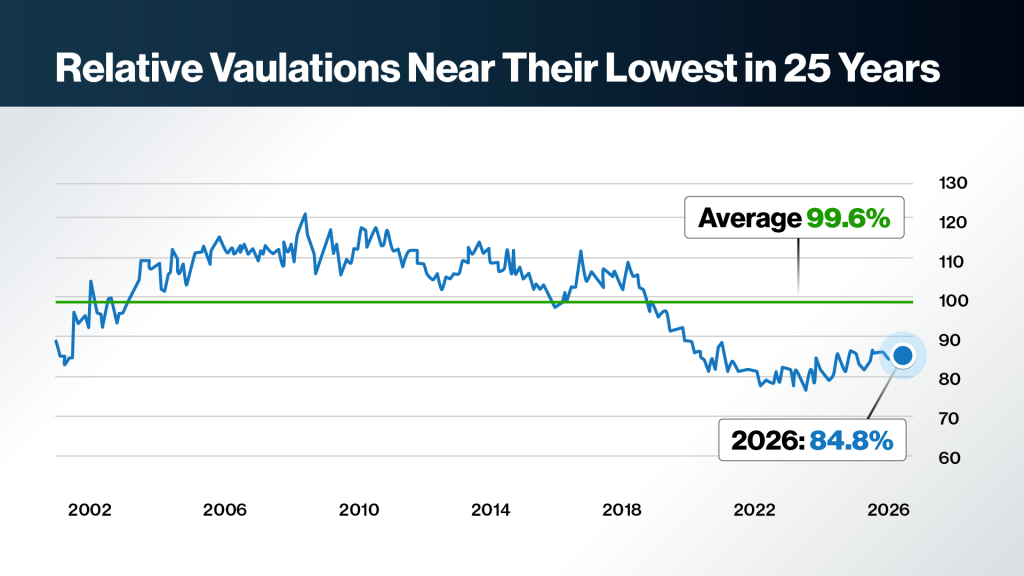
After a reporting season that produced roughly 27% year-over-year earnings growth, the S&P 500 has returned about 11% this year even as the market multiple has actually contracted from roughly 22 times earnings to 21 times earnings. Meanwhile, forward earnings expectations have continued to rise sharply. In other words, the heavy lifting has not come from investors paying higher valuations. It has come from companies generating significantly more earnings than expected.
That distinction matters because it shifts the conversation from whether stocks are expensive to whether earnings can continue to grow at the pace investors have become accustomed to.
According to Pasquariello, there are now two challenges facing the bull case.
The first is positioning.
Evidence of increasingly speculative behaviour is beginning to emerge across several corners of the market. Single-stock call option volumes have exploded, leveraged ETFs continue attracting massive inflows, and hedge fund gross exposure has surged toward extreme levels. Goldman does not believe positioning has yet reached the outright mania seen in 2000 or 2021, but on Pasquariello’s internal scale of speculative enthusiasm, the reading has climbed toward an 8 out of 10.

The second challenge is earnings momentum itself.
Goldman’s U.S. Portfolio Strategy team continues to forecast exceptionally strong profit growth, projecting approximately 24% earnings growth this year followed by another 13% next year. Those numbers remain supportive for equities. The question is whether investors should expect another quarter of upside surprises on the scale just witnessed.

This is where the road becomes narrower.
Goldman is not recommending investors fight the earnings power of U.S. mega-cap technology companies. The structural AI story remains intact and corporate profitability remains exceptional. However, the tactical setup is becoming increasingly crowded. The market capitalization gains investors enjoyed over the past two months may prove considerably harder to replicate over the next two months.
Put differently, the rally may continue, but the easy yards have likely already been gained.
That caution is becoming increasingly visible across several market indicators.
The closed above 30,000 for the first time in history. It is a remarkable milestone, given that the index traded near 12,000 when ChatGPT was first introduced to the public.
Semiconductor stocks continue to provide perhaps the purest expression of the AI investment cycle. recently surpassed a $1 trillion market capitalization after increasing net income nearly tenfold over the past year. In many respects, earnings growth and stock price appreciation have moved in almost perfect tandem.
At the same time, option market behaviour is beginning to resemble previous periods of speculative excess. Roughly one-quarter of the S&P 100 now exhibits an inverted call skew, a condition in which investors are willing to pay increasingly high premiums for upside exposure. The last time this became this widespread was during the early stages of the 2021 speculative boom.
Positioning data reinforces the same message. Hedge fund gross exposure recorded one of its largest monthly increases in the past five years, while client exposure metrics now sit near the highest levels observed in Goldman’s data. Momentum strategies remain extraordinarily profitable, but they have also become increasingly crowded and increasingly volatile.
Beyond the United States, the story remains equally remarkable. South Korea’s surged approximately 25% during May, Taiwan continues to rally aggressively, and Japan keeps making fresh highs. The AI boom is no longer solely an American story. Capital is increasingly flowing across a broader Asian technology ecosystem that now accounts for an increasing share of global market capitalization.
Meanwhile, credit markets remain almost unnervingly calm. Despite record issuance, investment-grade spreads remain near post-financial-crisis tights. Investors appear less concerned with credit spreads themselves and more focused on locking in yield wherever they can find it.
Perhaps the most remarkable statistic of all comes from household wealth. Since the end of 2019, U.S. household net worth has increased by approximately $70 trillion. That staggering accumulation of wealth continues to underpin consumption, investment, and risk appetite throughout the economy.
Ultimately, Goldman is not sounding an alarm bell. The firm’s message is more nuanced. Earnings remain strong. AI remains powerful. Corporate America remains exceptionally profitable. However, markets have moved from a phase in which valuation expansion and earnings surprises worked together to one in which future gains may increasingly depend on sustaining an already extraordinary rate of earnings growth.
The rally may not be over. But as Pasquariello puts it, the yards from here will likely be harder.
5 Stocks Our Experts Predict Could Double In the Next Year
By submitting your email, you'll also get a free pivot & flow membership. A free daily market overview. You can unsubscribe at any time.