Goldman Sachs strategist Ben Snider issued a quantified warning on May 15 that the AI Market Rally has structurally transformed the into something that no longer functions like a diversified index.
Technology stocks accounted for 85% of the index’s year-to-date return through that date, while the S&P 500 excluding technology advanced just 3%, reducing what is nominally a 500-stock benchmark to a vehicle whose performance is almost entirely determined by a handful of AI-linked names.
This analysis examines the crowding mechanism behind that concentration, the correlation risk it generates for passive investors who believe they own broad market exposure, and what the data, from Goldman’s momentum factor readings to the earnings revision picture outside AI infrastructure, actually implies for retail portfolio construction heading into the second half of the year.
Goldman Sachs: How the S&P 500 Became a Megacap AI Proxy
The arithmetic of index concentration reveals significant implications. The 10 largest companies account for 41% of the S&P 500’s market capitalization and 34% of its earnings, nearing the peaks of the late-1990s tech bubble when the average top-10 weight was around 20%.
Historical analysis indicates that when the top-10 share exceeds 25%, as seen in the 1990s, early 2020, and 2023, the following 12-month index returns average in the low-to-mid single digits, with increased volatility.
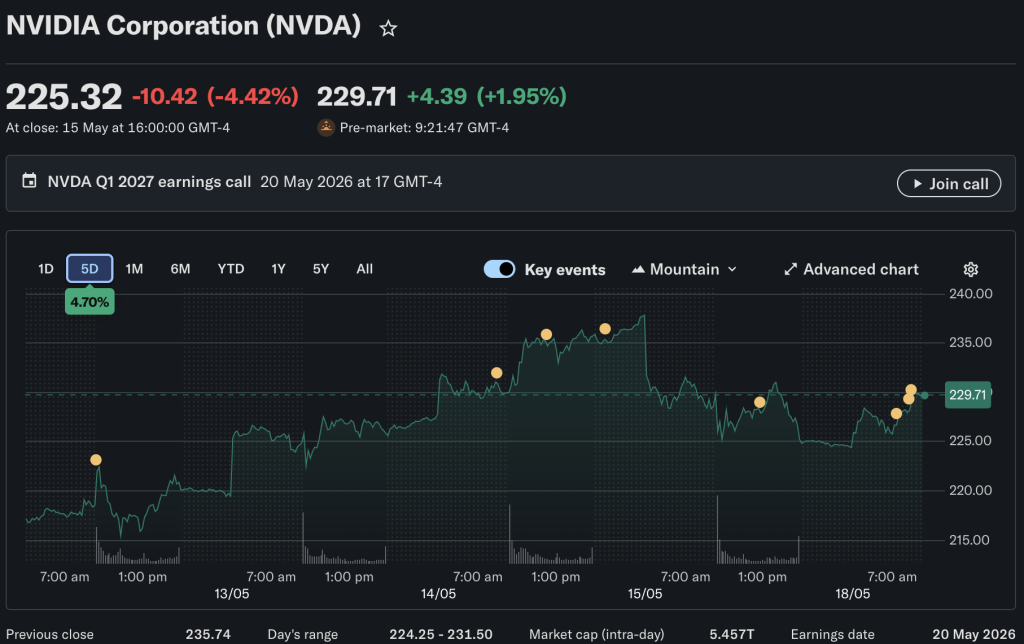
A prime example is Nvidia (), which at 9% of the S&P 500’s market value accounted for 20% of the index’s year-to-date return, meaning any slowdown in its performance could significantly impact the index.
Meanwhile, the median S&P 500 stock is trading 13% below its 52-week high, indicating limited participation in the rally. Goldman has highlighted this concern, noting in June 2023 that the top 10 stocks accounted for 31% of the S&P market cap and warned that such narrow leadership poses greater risks for passive investors.

The Earnings Revision Test: Separating Fundamental Support From Thematic Crowding
The key caution in Snider’s report is the earnings outlook, which complicates the bearish crowding concern. Consensus forecasts for S&P 500 earnings per share in 2026 and 2027 increased by 8% this year, indicating a stronger fundamental basis compared to past speculative phases.
Goldman Sachs highlighted improved earnings revision breadth across all sectors, suggesting the rally is aligned with business performance.
However, the details are less optimistic. Excluding AI infrastructure and energy firms, the 2027 earnings estimates for the S&P 500 are flat year-to-date. The aggregate 8% revision is mainly from the AI sector, signaling a link between rising equity prices and earnings.
Goldman’s analysis shows that AI-exposed stocks now trade at 30-35% higher price-to-earnings multiples than the broader market, raising concerns given stagnant earnings in non-AI areas.
Additionally, the Goldman Sachs hedge-fund ‘VIP’ basket shows increasing concentration, with the top 10 stocks accounting for about 70% of exposure, up from 55% a decade ago.
This trend indicates that institutional crowding is affecting both passive and active managers, limiting support for non-AI stocks during market downturns. Goldman maintained its year-end 2026 S&P 500 target at 7,600, suggesting limited upside from current levels.
***
Looking to start your trading day ahead of the curve?
Get up to speed before the bell with Bull Whisper—a sharp, daily premarket newsletter packed with key news, market-moving updates, and actionable insights for traders.
Start your day with an edge. Subscribe to Bull Whisper using this link.
5 Stocks Our Experts Predict Could Double In the Next Year
By submitting your email, you'll also get a free pivot & flow membership. A free daily market overview. You can unsubscribe at any time.