US stocks are set to open lower and are on track for steep weekly declines as investors continue to weigh the situation in the Middle East alongside the prospect of fewer .
US futures
-0.74%, -0.78%, and -0.87%
In Europe
-2.95% and -3%
- US stocks fall and are on track for another weekly decline
- Iran war approaches a 4th week with few signs of de-escalation
- The market no longer is pricing in a rate cut by the Fed this year
- slumps 8% this week
- is still set to rise across the week, is set to fall
US Stocks Fall, Heading for Another Weekly Loss
US stocks are set to open lower and are on track for steep weekly declines as investors continue to weigh the situation in the Middle East alongside the prospect of fewer rate cuts.
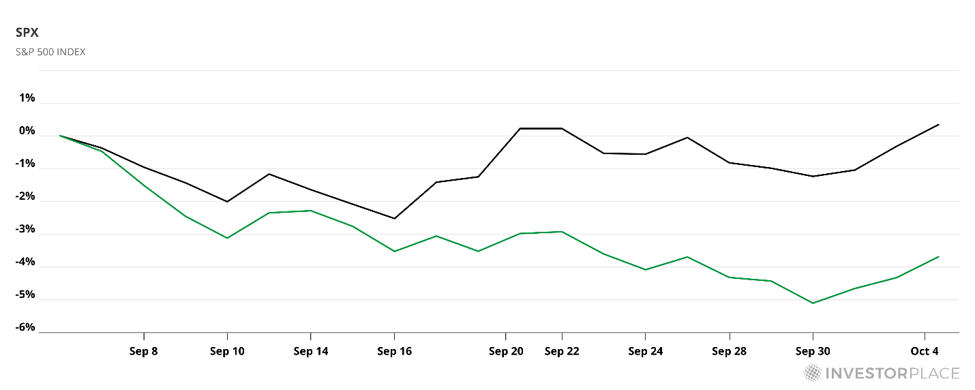
The has fallen 1.1% so far this week, its fourth straight weekly decline. The selloff comes as the Iran conflict approaches its fourth week, with few signs of de-escalation.
Oil remains a key focus. Although prices have eased from yesterday’s highs — when Brent briefly hit $119 a barrel — they are still around 40% higher since the start of March. President Trump has attempted to calm markets, saying he will do whatever it takes to bring oil prices down, helping to limit further downside in equities for now.
Stocks closed lower yesterday after the Federal Reserve left interest rates unchanged and forecast higher inflation ahead. The market is no longer pricing in a rate cut this year, pushing expectations for easing out towards 2027.
Given the uncertainty, central banks adopting a wait-and-see approach appears to be the most sensible path.
Meanwhile, gold is heading for a sharp weekly decline as several central banks turn more hawkish to counter rising inflation. This environment is weighing on non-yielding assets. Despite its safe-haven status, gold is down around 8% this week — its worst performance since early 2020 — as a stronger US dollar and rising Treasury yields dominate.
Corporate News
FedEx (NYSE:) shares have jumped 9% after fiscal Q3 results beat expectations. The company reported EPS of $5.25 on revenue of $24 billion, ahead of forecasts of $4.09 on $23.43 billion. FedEx also raised its full-year earnings guidance.
Dow Jones Forecast– Technical Analysis

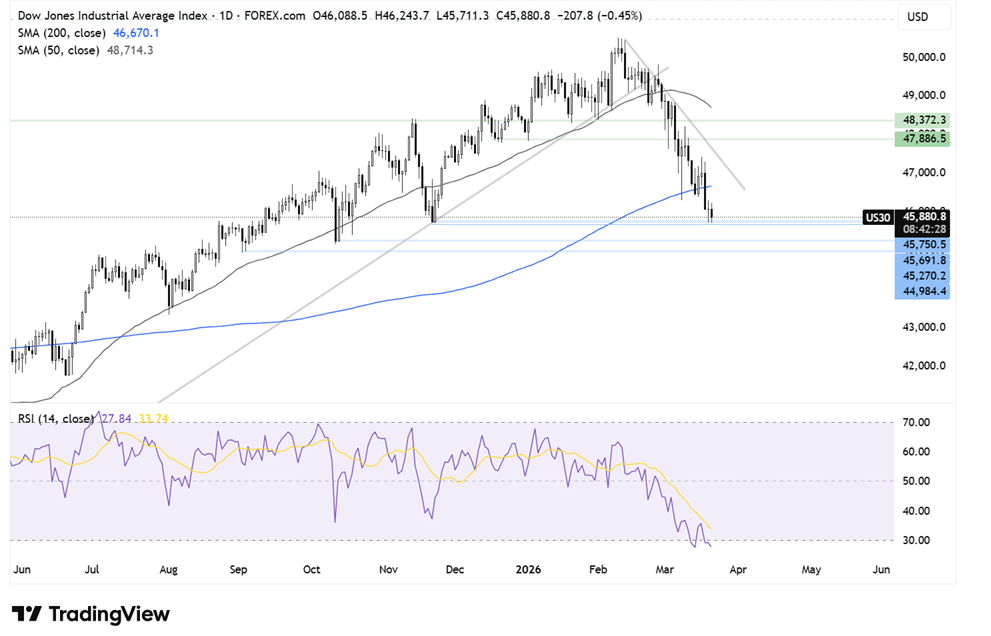
The Dow Jones has been trending lower since the start of the year after reaching a record high of 50,525. The index is trading below its falling trendline and has broken below the 200-day SMA, as well as support at 45,700 — the November 2025 low.
A break below this level could open the door towards 45,000 and then 44,160, the October low. On the upside, any recovery would need to reclaim the 200-day SMA at 46,650. A move above here would bring the falling trendline resistance at 47,400 into focus.
FX Markets – USD Rises, GBP/USD Falls
The is rising but remains on track to fall over the week after surging energy prices reshaped expectations for central banks. The Fed is now seen as one of the few major central banks not expected to hike rates this year. While the Fed still signals a possible , markets no longer see this as the base case.
is falling amid a rebound in the US dollar and as oil prices attempt to move higher again. The ECB left rates unchanged but revised inflation forecasts higher and reiterated that it stands ready to act if needed.
is also falling after data showed UK government borrowing rose sharply in February, even before the Iran conflict began. Public sector net borrowing came in at £14.3 billion, well above expectations of £8.5 billion — an 18% increase year-on-year, largely due to the timing of debt interest payments.
Oil Eases – WTI Is Set for a Weekly Decline, but Brent Is Set for a Weekly Rise
Oil prices are easing on Friday after a highly volatile week driven by developments in the Middle East.
WTI is on track to post its first weekly loss in five weeks, while Brent is still set to gain over 4% this week — its fifth consecutive weekly rise. The Brent-WTI spread is now at its widest since 2013.
Prices are softening as the US, Japan, and several European nations consider joint efforts to secure safe passage through the Strait of Hormuz. The US has also outlined measures to boost supply, including the potential release of strategic reserves, according to Treasury Secretary Scott Bessent.
Additionally, Israel has indicated it will stop targeting Iran’s energy infrastructure, supporting hopes of de-escalation after tensions earlier in the week pushed Brent to $119.
5 Stocks Our Experts Predict Could Double In the Next Year
By submitting your email, you'll also get a free pivot & flow membership. A free daily market overview. You can unsubscribe at any time.