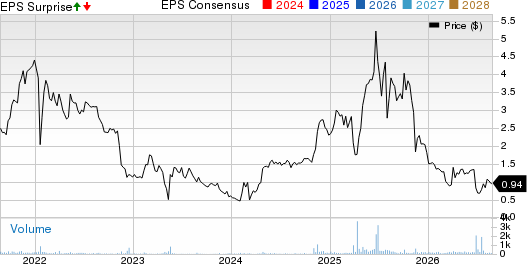
Pure-play quantum firms like and are in the midst of a second major decline this year after a brief rally in May, so the last thing these companies likely want to face is a more crowded field of competitors.
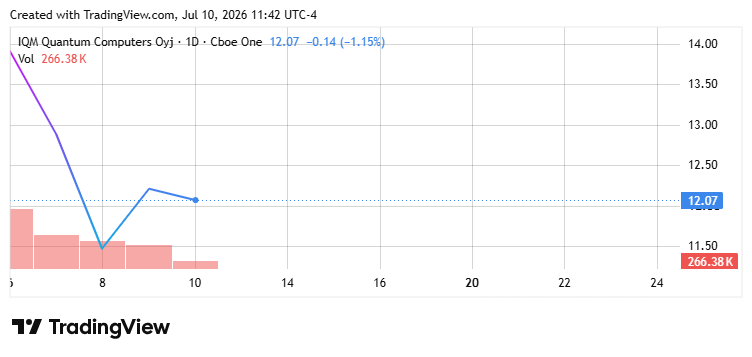
Nonetheless, that’s exactly what they will have to deal with after the early-July U.S. listing of , the first European quantum computing company to be traded publicly on a domestic exchange.
IQM joins a small but growing list of pure-play quantum firms available to investors in the U.S., and the implications for other companies on this list—D-Wave, Rigetti, and their peers—have both positive and negative connotations. IQM is already known as a strong engineering firm that has built a reputation for delivering physical systems, while others in the industry have struggled with deployment. The odds are that it will be a threat in some ways to D-Wave, even as it helps to buoy the quantum space at the same time.
IQM as a Competitor to D-Wave
IQM will certainly compete with D-Wave in some respects, though the two companies have somewhat different focuses in the quantum realm. While D-Wave’s emphasis has increasingly included cloud services in addition to its Advantage2 hardware deployments, IQM tends to prioritize on-premises systems. IQM is also a European firm, which means that it is operating both outside of D-Wave’s primary region and, conversely, that it threatens D-Wave’s capacity for expansion into that region.
Although IQM has previously catered mostly to large institutional clients, it appears to be looking to expand its customer base. Immediately after its listing on the Nasdaq, the firm moved to acquire select assets of Quantistry GmbH, a German cloud-based simulation workflow platform. The new tools acquired here should enhance AI-based research capabilities across the automotive, aerospace, chemicals, materials science, and pharmaceutical industries, immediately expanding IQM’s reach and cementing it as a firm integrating AI into quantum tools.
D-Wave Faces New Pressure as Quantum Competition Grows
Despite the challenges IQM will pose for D-Wave and other existing quantum companies, it also helps expand the public universe for this emerging technology at a time when all these firms are working for greater recognition. A broader group of pure-play quantum firms may help to further increase interest among customers and institutional investors.
This comes at a time when D-Wave is already seeing strong commercial momentum building. Bookings for the first quarter of the year reached a record $33.4 million, up almost 2,000% from the prior-year period, and the company’s pipeline is growing rapidly.
Of course, the more competitive the field becomes, the greater the need for D-Wave to differentiate itself. The company has already done so with its basic thesis on quantum technology: it is one of the few firms focused on something beyond the primary gate-model approach. But it must also back that up by standing out in terms of revenue growth, bookings, customer count, commercial deployments, and balance sheet strength. D-Wave has an advantage in its long history of working with enterprise customers, but, like other pure-play firms, it still struggles with profitability.
What It Means for Investors
IQM’s Nasdaq launch immediately gives investors another point of comparison and enables a more thorough evaluation of firms based on their capacity to drive commercial demand and customer adoption. It also bodes well for the industry as a whole, as it likely increases pressure on all quantum firms to innovate and develop products faster, improve hardware performance, and build better software ecosystems.
IQMX shares are unlikely to immediately break the tendency for pure-play quantum stocks to move in tandem—this may remain the case for some time yet, as the burgeoning industry continues to develop—but it may help the pre-existing companies in the space better define and distinguish themselves. This is important not only when it comes to competition among these smaller firms, but especially also as these companies face the significant threat posed by much larger tech giants that have been stepping into the quantum fray recently as well.

With IQM, investors may become more selective when choosing a quantum firm to invest in. The sector may move from a single speculative bet toward a differentiated space in which the market rewards individual companies differently based on how they demonstrate their value and capacity to execute. Even if it means harder times for companies like D-Wave, it may improve the industry overall.
5 Stocks Our Experts Predict Could Double In the Next Year
By submitting your email, you'll also get a free pivot & flow membership. A free daily market overview. You can unsubscribe at any time.