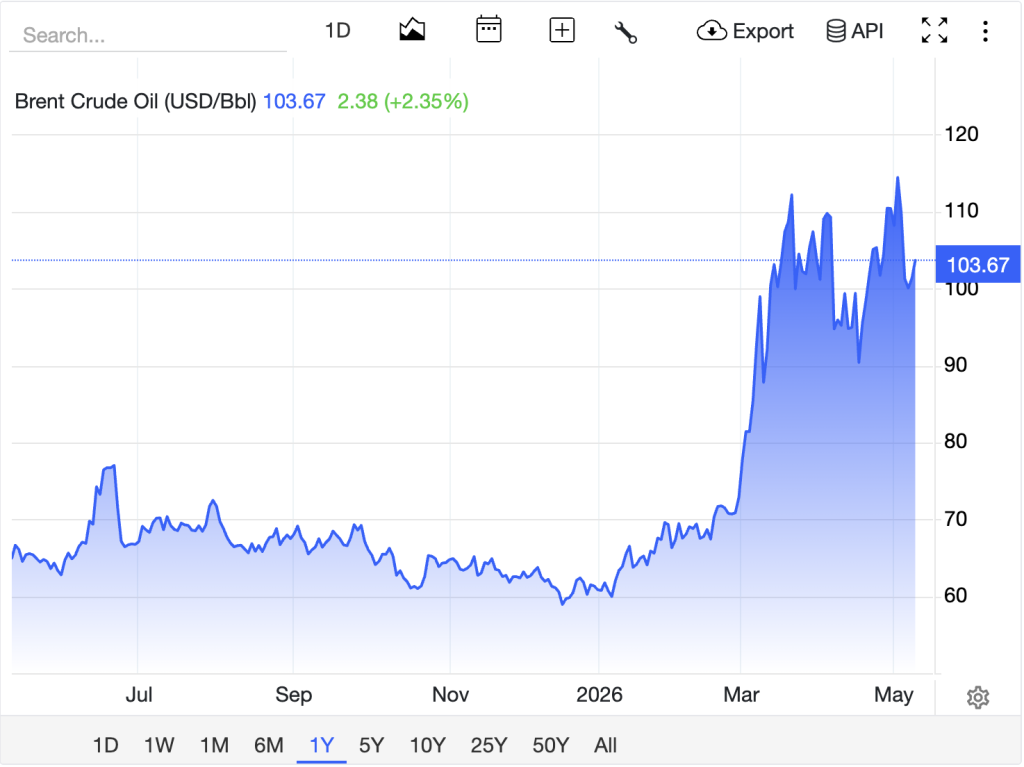
With at $103 per barrel and US-Iran trade friction keeping risk appetite suppressed, income investing has re-entered the rotation calculus for both institutional and retail participants, with two dividend leaders coming under the microscope.
The three raises examined below collectively extend multi-decade payout growth streaks, carry yields ranging from 3.0% to 3.6%, and arrive as the Federal Reserve’s policy posture keeps the anchored near 4.3%.
This is a level that compresses but does not eliminate the yield spread advantage that dividend growers have historically commanded over risk-free instruments.

Defensive Rotation and the Yield Spread Mechanism: Why Tech Volatility Is Redirecting Capital Into Dividend Growers
The shift from tech drawdown to dividend-stock inflows happens through two key channels. First, portfolio managers rebalancing away from high-multiple growth stocks create cash that flows into sectors with strong cash distributions.
Second, the valuation aspect shows that while a 50-year dividend grower yielding 3.4% appears narrow relative to a 10-year Treasury at 4.3%, the dividend’s 6%–8% annual growth leads to a higher effective yield over time.
In the current rate environment, as the Federal Reserve maintains near-neutral rates, dividend yield spreads are being adjusted, with investors considering whether Treasury rates are at their peak.
Morningstar highlights consumer staples and healthcare as sectors with solid payout ratios, allowing for continued dividend growth even with flat revenues.
BMO Capital notes that the current landscape favors “defensive yield with a growth kicker,” reflected in 72% bullish sentiment on StockTwits for tracked stocks. Interestingly, the steepening yield curve has bolstered the appeal of companies with long streaks of dividend increases, as they are better positioned to grow payouts during rate changes.
1. S&P 500 Leader : 53rd Consecutive Annual Dividend Increase, Yield Reaches 3.6%
PepsiCo has raised its quarterly dividend to $1.4225 per share from $1.355, a 5% increase that extends the company’s streak to 53 consecutive annual hikes and lifts the annualized payout to $5.69. The raise arrives against a Q1 2026 organic revenue growth rate of 4.2%, which management attributed to pricing power in its international beverage segment and volume recovery in Frito-Lay North America following destocking headwinds in late 2025.
Free cash flow over the trailing twelve months stood at $7.8Bn, covering the annualized dividend obligation of approximately $7.9Bn at a payout ratio near 69% – elevated but consistent with PEP’s historical range of 65%–72%.
The investment case for PepsiCo in the current macro environment centers on its dual-category structure: beverages and snacks exhibit near-identical demand elasticity, meaning volume does not collapse during economic deceleration as discretionary categories do.
Morningstar’s consumer staples team projects 4%–6% annualized dividend growth through 2029, with the 2030 annualized payout reaching approximately $6.85 at the midpoint of that range.
Dividend growth in this profile, compounding from a 3.6% starting yield, is structurally more attractive than the current 4.3% Treasury yield if the holding period extends beyond 4 years.
2. Johnson & Johnson (): Dividend King Status Reaffirmed With 63rd Consecutive Annual Increase

S&P 500 leader Johnson & Johnson increased its quarterly dividend to $1.30 per share from $1.24, marking a 4.8% rise and the 63rd consecutive annual increase, solidifying its position among the Dividend Kings. The annual payout is now $5.20, yielding about 3.4%.
This increase follows the Kenvue spin-off, resulting in a streamlined, higher-margin pharmaceutical and MedTech portfolio that generated $18.6Bn in adjusted free cash flow over the past year.
Post-spin, J&J has a payout ratio of roughly 47%, one of the lowest in the healthcare sector, allowing for significant investment in its $14.8Bn oncology pipeline and acquisitions. The company benefits from the non-discretionary demand in oncology and surgical tools, insulating it from market volatility.
***
Looking to start your trading day ahead of the curve?
Get up to speed before the bell with Bull Whisper—a sharp, daily premarket newsletter packed with key news, market-moving updates, and actionable insights for traders.
Start your day with an edge. Subscribe to Bull Whisper using this link.
5 Stocks Our Experts Predict Could Double In the Next Year
By submitting your email, you'll also get a free pivot & flow membership. A free daily market overview. You can unsubscribe at any time.