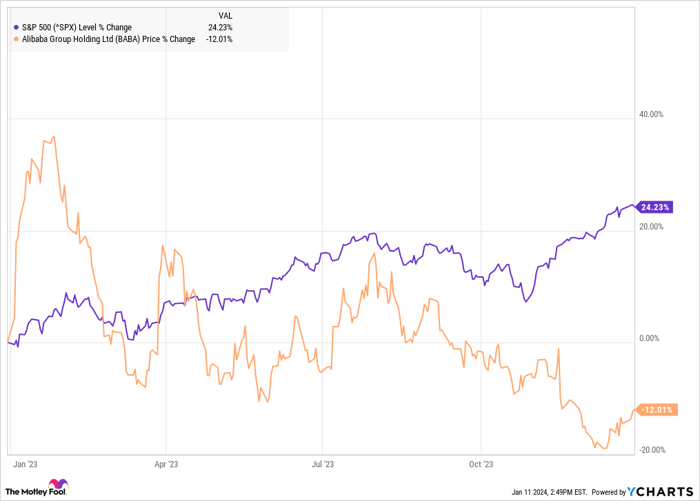
Alibaba (NYSE: BABA), the Chinese e-commerce giant, faced a tumultuous year in 2023. It grappled with challenges as the hopes for a Chinese economic recovery faltered, market share eroded, and a plan to spin off non-core businesses suffered a setback due to new U.S. chip export restrictions. Consequently, the stock finished the year down 12%, according to data from S&P Global Market Intelligence.
Despite a strong start, the stock relinquished those gains and spiraled downwards over the course of the year, as depicted in the chart below.
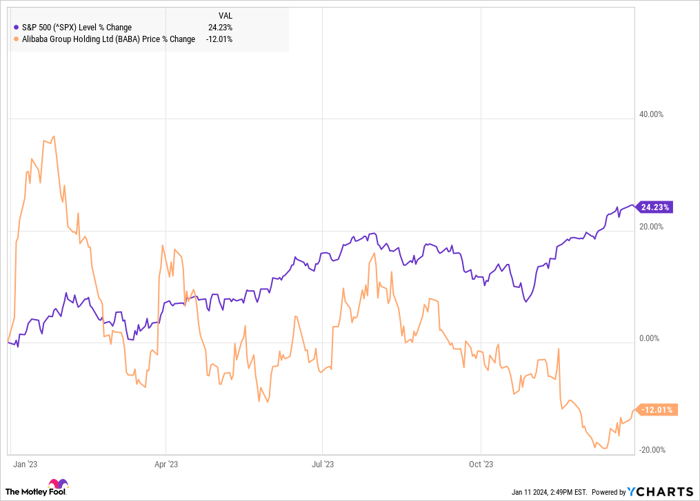
The Rollercoaster Ride of Alibaba Stock
Alibaba stock initially surged in 2023, buoyed by the prevailing optimism that the year would signal a resurgence in Chinese stocks following the relaxation of the country’s zero-COVID policy. Additionally, investors seemed hopeful that Beijing’s crackdown on the tech sector had waned, with Goldman Sachs even speculating on brighter days for the Chinese tech behemoth.
However, the stock faltered just before its earnings report in February and continued on a downward trajectory after the company posted a mere 2% revenue growth for the December quarter, albeit with a 14% increase in earnings per share to $2.79, driven by cost controls and efficiencies.
By the end of March, the stock rebounded following a plan to split the company into six businesses, with the e-commerce division, including Tmall and Taobao, remaining wholly owned by Alibaba.
The stock, however, relinquished its gains and remained volatile through the second quarter after a brief surge due to its March quarter earnings in May.
Concerns over U.S. export controls on chips also seemed to drag the stock down as shares faltered throughout most of the third quarter.
Come November, the stock plummeted as the company announced the cessation of the planned spinoff of its cloud computing business due to the U.S. export restrictions, which it stated “created uncertainties for the prospects of Cloud Intelligence Group,” adding that the spinoff would no longer create shareholder value.

Image source: Getty Images.
Outlook for Alibaba
In 2024, Alibaba stock continued to decline, signaling a challenging road ahead. The Chinese economy’s weakness and the company’s loss of market share to Pinduoduo and Temu-parent PDD Holdings, which has garnered consumer favor with its deals-focused model, are prime concerns.
Though Alibaba’s revenue growth appears to be improving, investors, after several years of unexpected tribulations for the company, necessitate conviction in its ability to deliver sustainable growth devoid of external disruptions.
Should you invest $1,000 in Alibaba Group right now?
Before investing in Alibaba Group, contemplate this:
The Motley Fool Stock Advisor analyst team has singled out what they believe are the 10 best stocks for investors to buy now, and Alibaba Group did not make the cut. The 10 stocks selected are anticipated to yield significant returns in the forthcoming years.
Stock Advisor provides investors with a straightforward plan for success, offering guidance on portfolio construction, regular updates from analysts, and two new stock picks every month. The Stock Advisor service has outperformed the S&P 500’s return by more than threefold since 2002*.
*Stock Advisor returns as of January 8, 2024
Jeremy Bowman has no position in any of the stocks mentioned. The Motley Fool has positions in and recommends Goldman Sachs Group. The Motley Fool recommends Alibaba Group. The Motley Fool has a disclosure policy.
5 Stocks Our Experts Predict Could Double In the Next Year
By submitting your email, you'll also get a free pivot & flow membership. A free daily market overview. You can unsubscribe at any time.