Sometimes, the smartest move is knowing when to put a former winner on the bench…
Listen to the audio version of this article (generated by AI).
In the early 1990s, the San Francisco 49ers faced a problem most NFL teams would have loved.
They had two future Hall of Fame quarterbacks on their roster.
Joe Montana, who had led the team to four Super Bowl victories, and Steve Young, a rising star who was ready to take over.
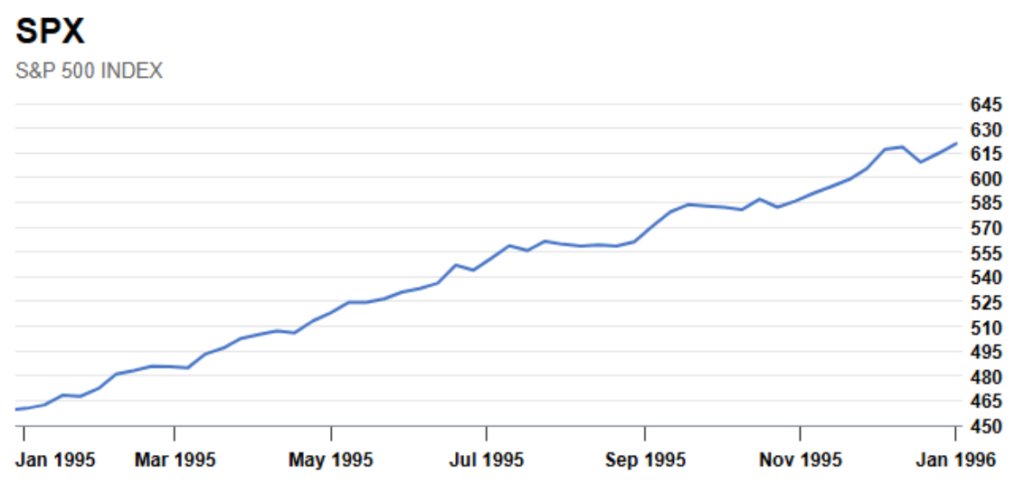
Eventually, the 49ers handed the offense to Young. And in January 1995, he led San Francisco to another Super Bowl victory.
Now, there’s a valuable investing lesson in that story.
You see, I’ve always believed that managing a stock portfolio is a lot like managing a championship football team. You want the best players on the field. And sometimes, that means replacing a proven winner with someone who has even greater potential going forward.
Well, the same thing happens on Wall Street.
A stock that delivered tremendous gains over the past few years might still have room to run. But if its sales and earnings are slowing, while another company’s business is taking off, you’d better pay attention.
After all, the goal is to build a portfolio that can keep winning, even as market leadership changes.
That’s why I’ve spent nearly 50 years developing and refining a stock-picking system designed to help me find Wall Street’s strongest opportunities.
And believe it or not, it all started with a college assignment that I technically failed.
So, in today’s Market 360, I’ll explain how that discovery changed my approach to investing and why my system is particularly valuable in today’s changing market.
I’ll also tell you about a special presentation I’m hosting on Thursday, November 12, at 2 p.m. Eastern, where I’ll reveal what I believe the Fed’s next moves could mean for your investments in 2027 – and how I’m preparing to take advantage of the opportunities ahead. (Reserve your spot for this free event here.)
The Secret Was in the Stocks
It all started when I was studying finance at Cal State Hayward in the late 1970s.
One of my professors assigned me to build a stock selection model that would mirror the performance of the S&P 500. Thanks to that professor, I had access to Wells Fargo’s mainframe computers. Remember, this was back when computers took up entire rooms.
After countless hours studying market data and building my model, I finally ran the numbers.
And to my surprise, my model didn’t just match the S&P 500 – it beat it!
Now, here’s why that discovery ended up changing my life.
Princeton economist Burton Malkiel had famously argued that a blindfolded monkey throwing darts at a newspaper’s stock listings could pick investments just as well as the professionals on Wall Street.
But my model was telling me something very different.
A relatively small group of stocks was responsible for much of my portfolio’s outperformance. Better yet, these companies had something in common.
Their sales and earnings were growing. Their operating margins were expanding. And they consistently delivered positive earnings surprises.
In fact, I eventually identified eight fundamental factors that helped me pinpoint companies with the potential to outperform the broader market.
But I also learned that strong fundamentals were only part of the equation. Even a great company can be a disappointing investment if the big institutional investors aren’t buying its shares.
That’s why I added a second measure to my research: institutional buying pressure.
Together, those two measures became the foundation of my proprietary Stock Grader system.
Today, Stock Grader analyzes more than 6,000 stocks, assigning each a grade from A to F based on its Fundamental and Quantitative Grades.
And here’s the beauty of this system, folks. It doesn’t care about old market trends or yesterday’s headlines. It follows the fundamentals and institutional buying pressure, wherever they lead.
That’s especially valuable when market leadership starts to change.
Knowing When to Change the Lineup
If you’ve followed my recommendations over the years, you’ve probably noticed that the stocks I favor today look different from the ones I recommended a year or two ago.
Back then, we owned a lot of gold mining stocks as prices were hitting record high after record high. AI stocks were prominent in our portfolios, too, of course.
That’s no accident. That’s Stock Grader doing exactly what it’s designed to do.
But lately, my system has been pointing me toward some compelling opportunities in energy and shipping. That’s because the war with Iran has disrupted global energy markets, creating new challenges for some companies and opportunities for others.
And by following the fundamentals, I’ve been able to recommend several stocks that have delivered impressive gains. For example:
- International Seaways, Inc. (INSW), an oil tanker operator I recommended on March 6, has climbed 54%.
- Okeanis Eco Tankers Corp. (ECO), another tanker company I recommended on June 22, has gained 61%.
- HF Sinclair Corporation (DINO), an oil refiner I recommended on June 23, has surged 50%.
Those are remarkable gains, especially considering the uncertainty surrounding the energy markets.
And they illustrate an important point: While investors are focused on the latest headlines, my system is searching for companies with the strongest numbers.
Now, don’t get me wrong. I’m still very bullish on artificial intelligence. In fact, some of my favorite stocks remain tied to the massive buildout of AI infrastructure.
But I’m not going to ignore opportunities in other industries simply because they aren’t grabbing the headlines. When the numbers point me toward stronger opportunities, I’m prepared to act.
Sometimes, that means selling a good stock to buy a better one.
Building a Championship Portfolio
And that brings me back to the San Francisco 49ers.
A championship coach knows that the lineup that won last year’s Super Bowl might need to change to win the next one.
The same is true of investing. I want to let my winners run as long as their fundamentals remain strong. But I also want to be ready when new opportunities emerge.
I believe that approach will be more important than ever as we head into 2027.
You see, the Federal Reserve’s next moves could have a major impact on the stock market. With interest rates and market leadership shifting, investors need to be especially careful about where they put their money.
That’s why I’m preparing to unveil an entirely new way of putting my stock-picking research to work.
On Thursday, November 12, at 2 p.m. Eastern, I’m going to reveal what I’ve been working on during a special presentation.
Click here to reserve your spot now.
During this event, I’ll explain what I expect from the Fed in the months ahead and what its next moves could mean for your investments in 2027.
I’ll also share a Wall Street indicator with a remarkable historical track record of predicting the market’s next moves, and explain why I believe investors need to prepare now rather than wait until next year.
Most importantly, I’ll reveal a brand-new way I’m putting Stock Grader to work to identify what I believe could be the market’s next big winners.
Plus, you’ll receive two free stock recommendations:
- One stock I believe could be among 2027’s biggest winners.
- One popular stock I believe investors should avoid.
I’ll give you the names and ticker symbols of both stocks absolutely free.
Click here now to register for my November 12 presentation now.
Sincerely,
Louis Navellier
Editor, Market 360
The Editor hereby discloses that as of the date of this email, the Editor, directly or indirectly, owns the following securities that are the subject of the commentary, analysis, opinions, advice, or recommendations in, or which are otherwise mentioned in, the essay set forth below:
HF Sinclair Corporation (DINO), International Seaways, Inc. (INSW) and Okeanis Eco Tankers Corp. (ECO)
5 Stocks Our Experts Predict Could Double In the Next Year
By submitting your email, you'll also get a free pivot & flow membership. A free daily market overview. You can unsubscribe at any time.