Within minutes of the April 25, 2026, White House Correspondents Dinner shooting, in which Secret Service neutralized 32-year-old Malik Thompson within 45 seconds of three shots being fired, with two attendees sustaining non-life-threatening leg wounds.
At the same time, social media platforms were generating a parallel information event that would prove more consequential for markets than the incident itself: a coordinated surge of AI-manipulated imagery and unverified claims pushed the term “staged” past 300,000 posts on X by midday Sunday evening, according to TweetBinder data.
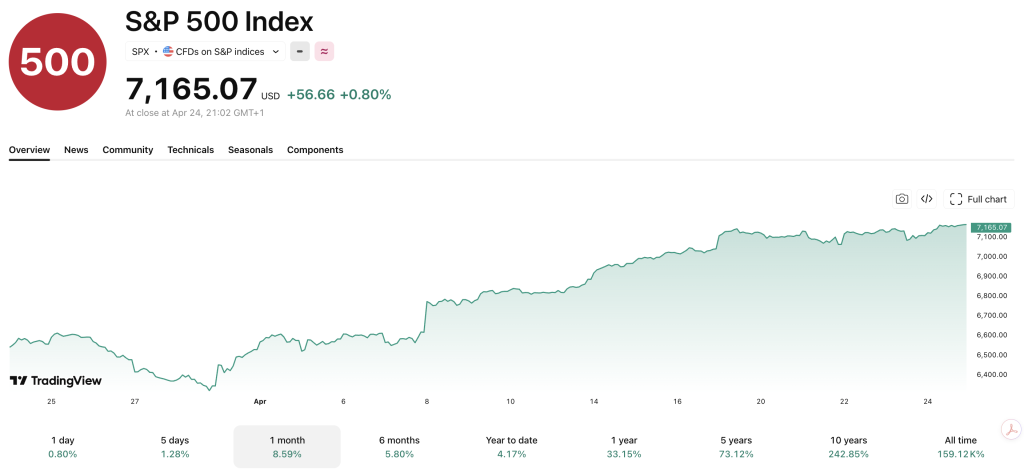
Consequently, registered a -1.2% dip at 10:15 PM ET on April 25 as trading algorithms began processing raw sentiment signals before any official confirmation had cleared verified news wires.
In a high-frequency trading environment where natural language processing models ingest social sentiment at machine speed, a coordinated misinformation surge is functionally indistinguishable from a confirmed geopolitical shock until human verification intervenes, and that verification lag, measured in minutes, is precisely the window in which automated order flow can move index futures, widen bid-ask spreads, and trigger stop-losses on leveraged positions.
 SOURCE: TradingView
AI-Generated Shooting Hoax: How the False Narrative Spread and What It Triggered Following the Correspondents’ Dinner
The misinformation lifecycle at the correspondents dinner followed a familiar pattern: an information vacuum created by the rapid neutralization of the incident, no fatalities, was quickly filled by speculation from influencers before any verified accounts could establish facts.
Users across X, Facebook, and TikTok, regardless of political affiliation, began claiming the attack was “staged,” linking it to unfounded plots involving President Trump and the U.S.-Iran conflict. TikTok videos tagged #WHCDShooting amassed 150 million views within 12 hours, while Facebook groups peddling “deep state psyop” theories grew by 250,000 members overnight.
A significant aspect was the AI-driven misinformation, with analysts noting that about 40% of viral images were deepfakes, crafted to falsely implicate Israeli-linked causes. This narrative was further amplified by RT, the Russian state news channel.
Shooter Thompson had posted a manifesto mentioning “Zionist influence” just before the event, which bad-faith actors used to fabricate disinformation across multiple platforms.
Flash-Crash Mechanics: How Trading Algorithms Amplified the False Signal
On April 25, S&P 500 futures fell -1.2%, but quickly rebounded after reports confirmed no fatalities and a swift Secret Service response. This was driven by high-frequency trading algorithms reacting to sentiment spikes from unverified posts on X, compressing what used to be a multi-hour rumor cycle into a rapid automated response.
Modern trading algorithms use natural language processing to interpret social media data as a real-time news feed, treating sentiment signals from over 300,000 “staged” posts as risk indicators.
Thus, market volatility stemmed not from the event itself but from the speed of misinformation, demonstrating that AI-driven misinformation can significantly impact futures markets.
During this period, market makers lacking real-time, verified data were adversely affected, caught off guard by volatility driven by synthetic content.
This situation highlights concerns raised by the IMF about how emerging technologies can escalate market crises, prompting large institutional players like JPMorgan to evaluate new exposure risks when AI-generated information is fed into their systems.
What Media Organizations and Social Networks Did in Response to the Correspondents Dinner
The institutional response to the surge of misinformation surrounding the correspondents dinner was slow, underscoring a critical information-integrity risk.
Fox News’ Eugene Daniels criticized false-flag claims as “reckless,” while MSNBC’s Jonathan Capehart urged trust in verified journalism, but neither message achieved the reach of the original misinformation.
On April 26, 2026, WHCD Association Chair Kelly McBride announced new security measures, including AI-driven credential scanners, as a response to both physical and information security failures.
The House Oversight Committee plans hearings on social media misinformation for May 5, 2026, subpoenaing executives from X and TikTok, while the Secret Service will release a shooter profile report by April 30, 2026.
Information Integrity as a Market Risk Factor: What Investors Should Monitor
The WHCD event highlights a new market risk from coordinated AI misinformation during low-liquidity trading sessions. Algorithmic trading platforms and sentiment-based ETFs are particularly vulnerable, as they react to social sentiment without human verification.
Three key triggers to monitor include:
-
The May 5, 2026, House Oversight Committee hearings on social media misinformation, which could lead to policy changes affecting X and TikTok’s handling of unverified news, impacting trading algorithms’ sentiment signals.
-
The SEC’s exploration of regulations on algorithmic trading, which may affect how quantitative funds acquire news if synthetic social content is deemed manipulative.
-
The rise of information-verification firms and AI watermarking emphasizes the importance of AI safety for investors.
The WHCD pattern of misinformation, algorithmic response, localized volatility, and delayed correction is likely to recur during high-visibility events. Investors who view information integrity as static rather than a dynamic risk may face significant unpriced exposure.
***
Looking to start your trading day ahead of the curve?
Get up to speed before the bell with Bull Whisper—a sharp, daily premarket newsletter packed with key news, market-moving updates, and actionable insights for traders.
Start your day with an edge. Subscribe to Bull Whisper using this link.
5 Stocks Our Experts Predict Could Double In the Next Year
By submitting your email, you'll also get a free pivot & flow membership. A free daily market overview. You can unsubscribe at any time.