The had a much larger move than I anticipated. I thought we might see some kind of rebound, but I didn’t expect the big move we saw on Tuesday.
That was a surprise, as I expected implied volatility to stay elevated.
On Tuesday, we started seeing the VIX come down, and my thinking was that we’d see a spike in VIX 1-Day and that the regular VIX would remain elevated, putting downward pressure on the S&P 500.
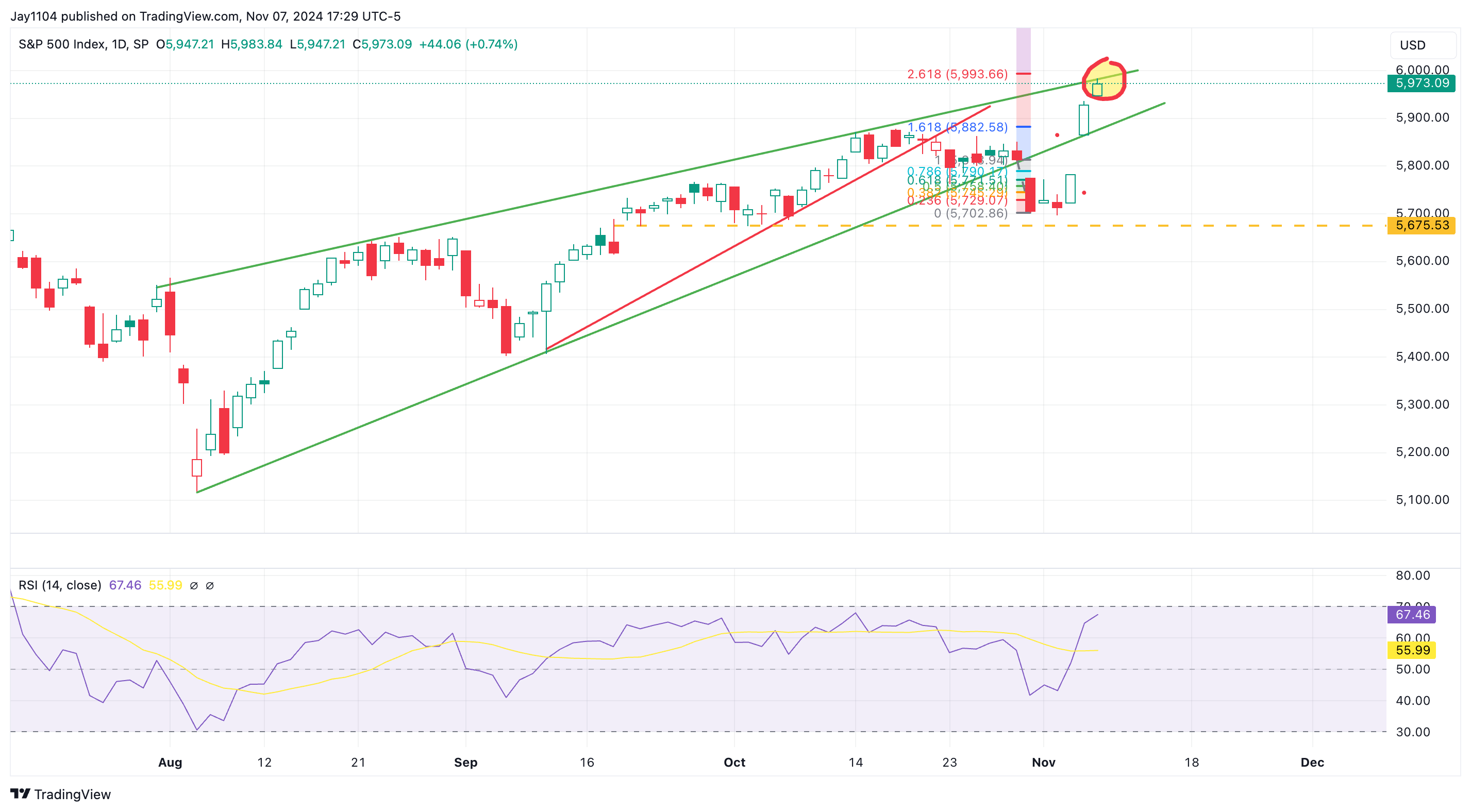
So, the nervousness we’d typically expect before an election wasn’t there, and the market just moved higher. This doesn’t invalidate the rising wedge pattern, but it’s a different setup now.
The question now is whether this was a “throw under” that will bring us down, around, and up again. It’s early to speculate too much, but if this trendline breaks, it could suggest further upward movement.
A lot of this will depend on factors outside of the stock market, like whether implied volatility continues to decrease and if the 10-year rate stabilizes or declines materially.
If rates start to come down and implied volatility follows, stocks could keep climbing. If rates, implied volatility, and the dollar index stabilize (which is more in line with my view), stocks might consolidate at current levels.
We’re at the upper Bollinger Band, which is typically where the market consolidates. Ideally, the RSI would be above 70 to confirm this as a consolidation point, but it’s still a reasonable level to expect a pause, especially ahead of the CPI report.
I don’t think yesterday’s meeting changed the outlook much. Swap pricing didn’t budge significantly—there was a 50% of a rate cut in December, which is now at 60%.
Powell dismissed concerns about rising rates, almost giving the market the green light to continue moving higher if it wants.
10-Year Yields Come Across Resistance
Rates dropped a bit yesterday, with the dropping by ten basis points. This retraces some of the significant moves we saw over the last two days, with a sixteen basis point increase day before yesterday.
The 10-year rates have become pretty overextended here. We got above the upper Bollinger Band and were overbought on the RSI.
This is a major resistance level, so it looks like a place where, if the 10-year rate is going to consolidate, it will probably happen over the next few days, possibly leading into the report next week. 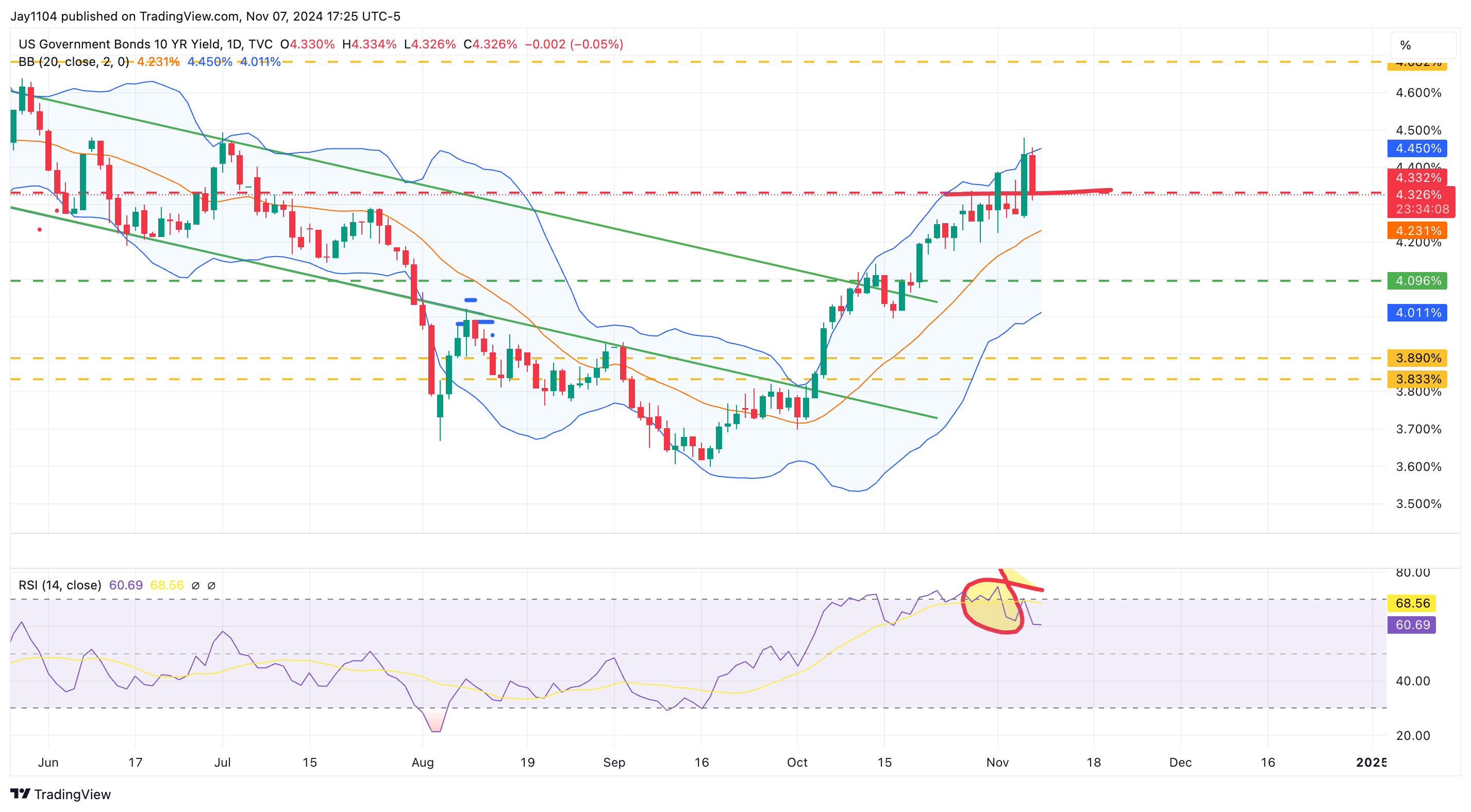
We’ve also seen a similar pattern with the —it’s gotten overbought and overextended. The index made a huge move yesterday, and yesterday it was down just a bit.
Again, it’s overextended, near the upper Bollinger Band, and didn’t quite reach 70 on the RSI but got close. This is an area where you’d expect some consolidation around the 104.90 level, which has been a significant level in the past.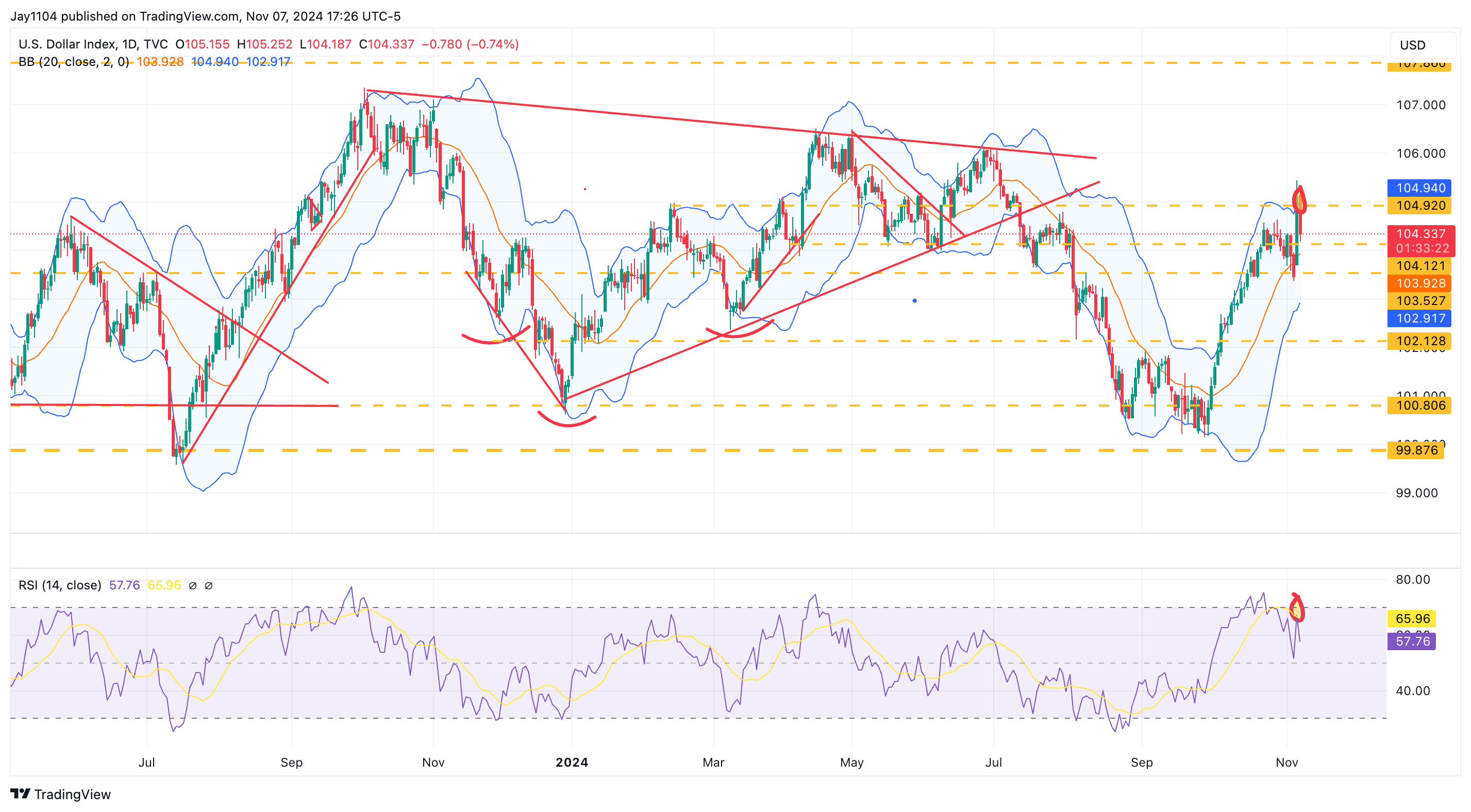
The , of course, made a big move down yesterday following the election results. I think this decline in the VIX powered the higher.
The VIX dropped much quicker than I expected. We often talk about event risk and implied volatility coming down, but this was a substantial drop all at once, which led to a notable rally in stocks, as you’d expect.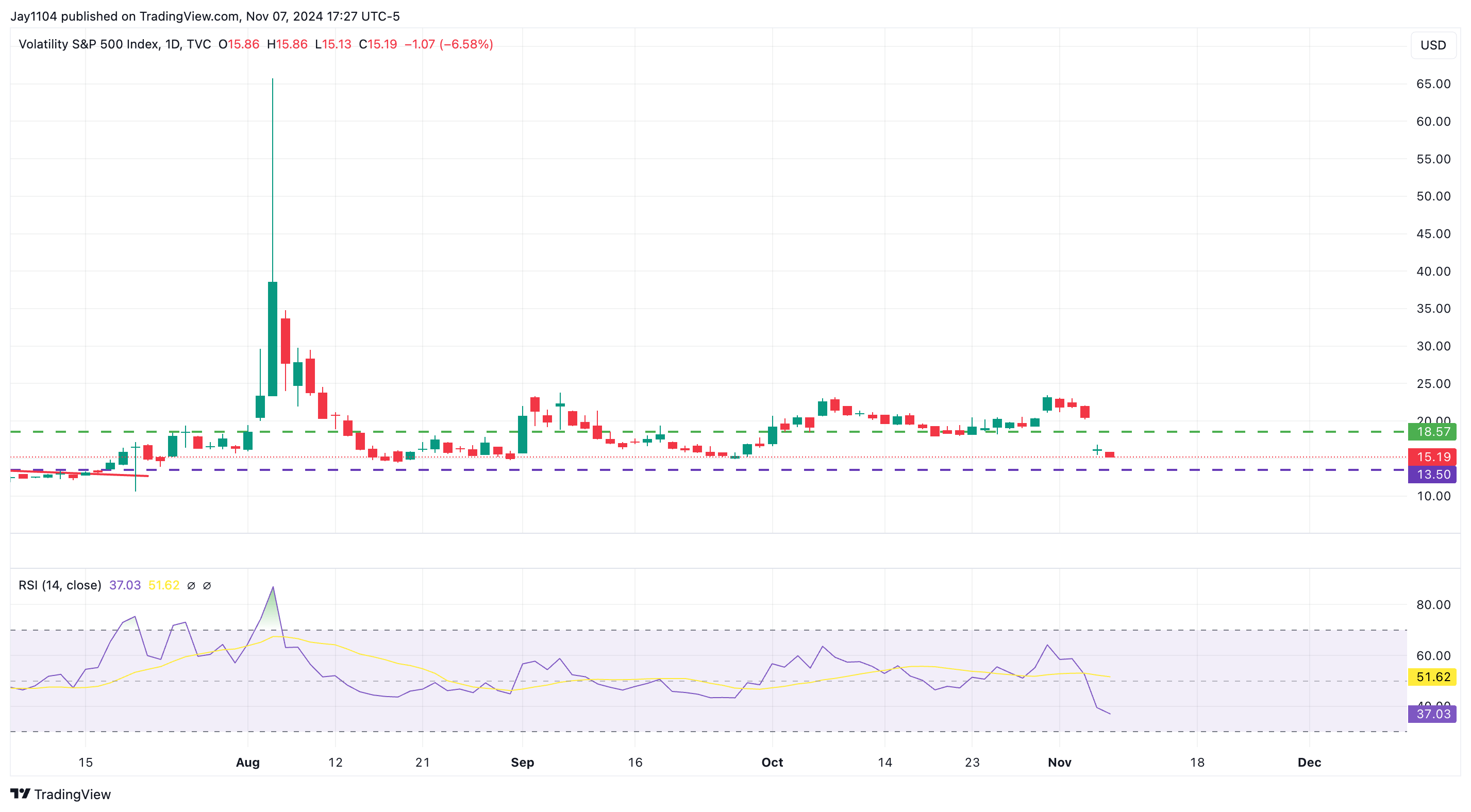
More Downside Ahead for Volatility Index?
The question now is whether there’s further downside for the VIX. That depends on how much movement we see in the market from here.
Volatility is volatility, so a 2% market rise or fall results in a 2% realized volatility move. Looking at current levels of realized volatility, I wouldn’t say they’re low—they’re actually on the upper end of the range going back to 2022.
For example, the 10-day realized volatility is around 19, and the 20-day is around 15. These levels are higher than we’ve seen over the last two years.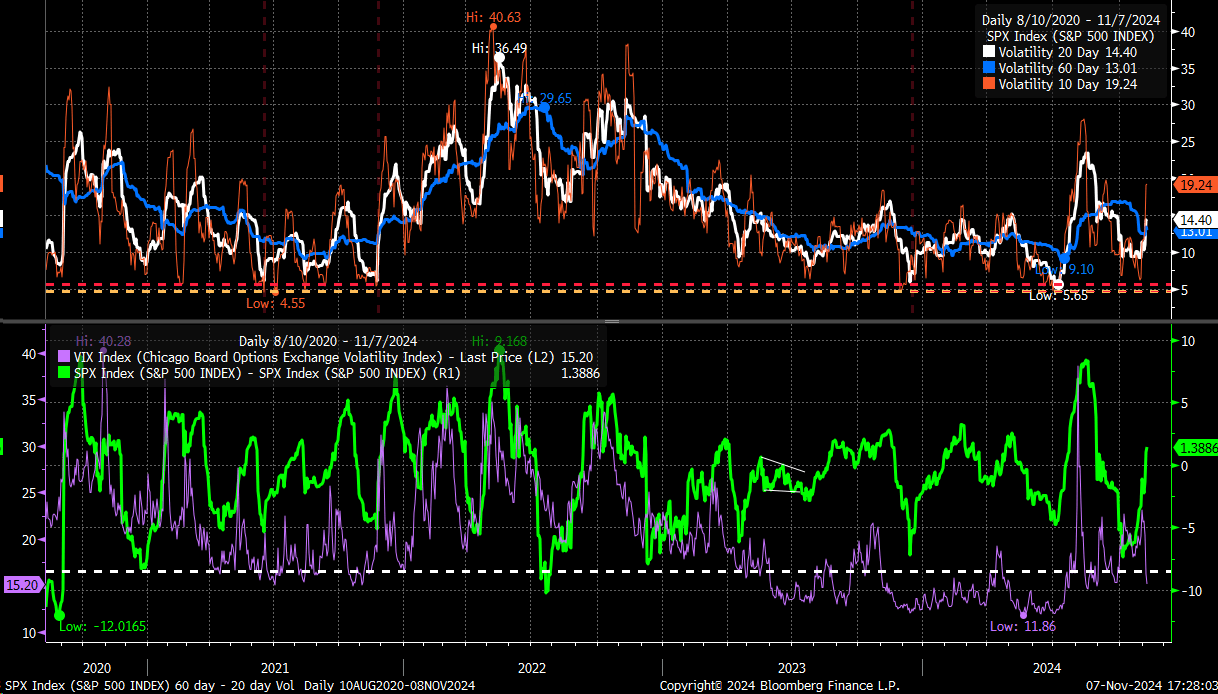
So, I wouldn’t expect the VIX to collapse here. If the market continues moving at current rates, we’re likely to see realized volatility increase, which won’t be favorable for the VIX.
Currently, the spread between the 20-day and 60-day realized volatilities is widening, and historically, when the 20-day realized vol increases faster than the 60-day, the VIX tends to rise as well.
So, it’s hard to predict a substantial drop in the VIX from here—it might simply hold at current levels.
Anyway, that is it for now.
5 Stocks Our Experts Predict Could Double In the Next Year
By submitting your email, you'll also get a free pivot & flow membership. A free daily market overview. You can unsubscribe at any time.