Russ Cohen

Nvidia (NVDA) to Replace Intel in the Dow Jones Industrial Average

Nvidia (NVDA) is being added to the Dow Jones Industrial Average, replacing rival chipmaker Intel (INTC).

The change will occur on November 8, according to S&P Global (SPGI), the company that manages the Dow Jones Industrial Average and is responsible for its composition. Additionally, S&P Global said that paint company Sherwin Williams (SHW) will replace chemical company Dow Inc. (DOW), also on November 8.

The switch between Nvidia and Intel is a significant shake-up for the Dow Jones Industrial Average, which is an index comprised of 30 blue-chip stocks that is meant to represent a cross-section of the U.S. economy. It also reflects the diverging fortunes of Nvidia and Intel.

Nvidia’s Success and Intel’s Struggles

Joining the Dow index is the latest achievement for Nvidia, whose stock has rallied 173% this year as demand for its microchips rises with the artificial intelligence (AI) boom. Nvidia is now one of only three companies that has a $3 trillion market capitalization, along with Microsoft (MSFT) and Apple (AAPL).

For Intel, being removed from the Dow 30 is another blow to the once-leading microchip company that has fallen on hard times. Intel’s stock has declined 53% this year as the company struggles to develop a foundry business and manufacture, as well as design, chips and processors.

These are the first changes to the Dow index since February of this year when e-commerce giant Amazon (AMZN) replaced pharmacy Walgreens Boots Alliance (WBA). Being added to the Dow is positive for Nvidia as mutual funds and exchange-traded funds (ETFs) that track the index will now be required to buy NVDA stock.

See also  Exploring the Lucrative Opportunities in Mid-Tier Gold MiningThe Rise of Mid-Tier Gold Miners

As the current state of the gold market unfolds, mid-tier and junior miners have emerged as captivating prospects for investors seeking substantial returns. In the wake of the latest quarterly results, these smaller gold producers have showcased exceptional performance, underpinned by escalating production rates, reduced mining costs, and a buoyant gold price environment. The resultant profitability surge signals a promising future for mid-tier miners, poised to shed their undervalued status.

Decoding Gold-Stock Tiers

The realm of gold mining is stratified into distinct tiers based on annual production capacities, ranging from small juniors with modest outputs to huge super-majors operating on a colossal scale. The VanEck Junior Gold Miners ETF (NYSE:) stands out as a key player, predominantly housing mid-tier gold stocks despite its misleading nomenclature. The delineation between juniors and mid-tiers holds essential implications for investment strategies, with mid-tiers offering a blend of substantial production, growth potential, and market capitalization conducive to significant gains.

The Performance Paradox

The intrinsic leverage of gold stocks in relation to the underlying gold prices manifests as a double-edged sword for investors. Recent events have underscored this phenomenon, wherein the VanEck Junior Gold Miners ETF (NYSE:) exhibited a lackluster response to gold price fluctuations. While gold staged notable rallies, the ETF's performance lagged behind, failing to magnify the upswings in the precious metal market. This disconnect unveils the intricacies of investing in gold stocks, which demand superior performance to counterbalance inherent risks.

Unveiling Q4 Performances

Amidst the quarterly performance evaluations of the top 25 constituents of GDXJ, pivotal insights into mid-tier gold miners' operational and financial standings emerge. The analysis, chronicling production rates, cost dynamics, revenue streams, and earnings, showcases a remarkable Q4 showing characterized by production growth, cost efficiencies, and robust earnings. The synergy of these factors culminated in substantial profit escalations, cementing the appeal of mid-tiers and juniors in the gold mining sector.

Fueling Growth Through Production

Production escalation stands as the linchpin of success for gold miners, nurturing a virtuous cycle of growth by bolstering cash flows and profitability. The recent performance of the GDXJ-top-25 gold miners, heralding a seventh consecutive quarter of output growth, exemplifies this paradigm. With a collective production rise of 2.8% year-over-year in Q4'23, these mid-tiers outpaced their larger counterparts, signaling a robust trajectory of growth and resilience amidst market fluctuations.

Setting the Stage for Success

Amidst the shifting landscapes of gold mining, mid-tier miners like Equinox Gold (NYSE:) epitomize the industry's metamorphosis. Equipped with expansion plans to bolster their standing within the GDXJ ranks, these mid-tiers harness innovation and strategic acquisitions to propel growth and solidify their market presence. The narrative unfolding in the gold mining sector underscores the strategic allure of mid-tier and junior miners, poised to capitalize on the sector's burgeoning potential.

Insights into the Gold Mining Industry Exploring the Golden Opportunities in the Mining Sector

Is NVDA Stock a Buy?

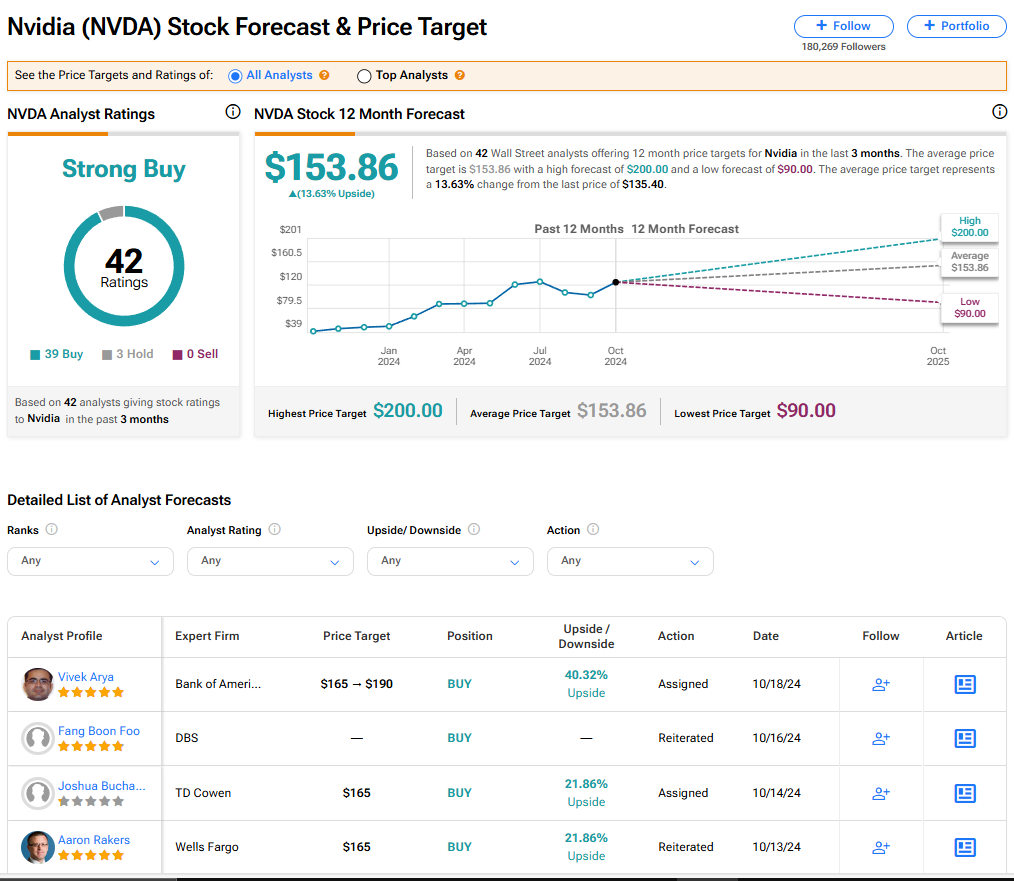
Nvidia’s stock has a consensus Strong Buy rating among 42 Wall Street analysts. That rating is based on 39 Buy and three Hold recommendations assigned in the last three months. There are no Sell ratings on the stock. The average NVDA price target of $153.86 implies 13.63% upside from current levels.

Read more analyst ratings on NVDA stock

5 Stocks Our Experts Predict Could Double In the Next Year

By submitting your email, you'll also get a free pivot & flow membership. A free daily market overview. You can unsubscribe at any time.