Key Points
Stock splits always generate healthy buzz around a company. Not only do these events make a stock more liquid and easier to trade, but they typically come on the heels of substantial share price growth. Both of these things are true for Netflix (NASDAQ: NFLX). After rallying approximately 800% over the last 10 years, the streaming giant executed its 10-for-1 split on Nov. 17, and shares now trade at about $106 at the time of this writing.
But while the split puts Netflix shares in reach for employees and investors who might not have access to fractional shares, it doesn’t change the company’s fundamentals or market capitalization. Let’s explore the underlying business to decide if Netflix stock still represents a compelling long-term investment.
Where to invest $1,000 right now? Our analyst team just revealed what they believe are the 10 best stocks to buy right now. Continue »
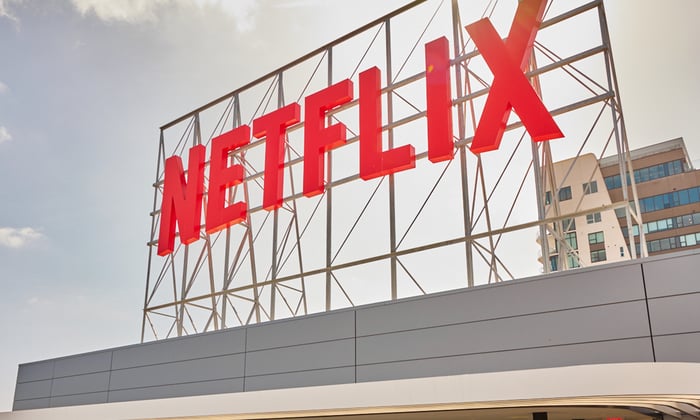
Image source: Netflix.
Stock splits boost hype, not fundamentals
According to 2024 research from data analysis company Statista, stocks that undergo a split usually outperformed the market with an average total return of 25.4% in the 12 months following their split — double the S&P 500‘s performance over the same time frame.
That said, investors should remember that correlation isn’t necessarily causation. Stock splits don’t change a company’s fundamentals, and companies that have undergone a split may outperform the broad market over the following year because high-performing companies are more likely to split their stocks to keep their share price at a more manageable level.
Netflix’s fundamentals remain compelling
While the new technology hype cycle of generative artificial intelligence (AI) has taken a lot of Wall Street attention away from Netflix, the movie and video streaming giant still offers a lot to be excited about. Third-quarter earnings show a company that is still generating respectable growth.
Sales jumped 17% year over year to $11.51 billion as Netflix hit its highest quarterly market share in the U.S. and U.K. The company continues to roll out new original programming and invest in sports broadcasting with highly anticipated events like the Canelo vs. Crawford boxing match, which became the most-viewed championship fight of the century. Netflix’s content spending overall is set to hit $18 billion in 2025, and much of it will go to markets outside of North America.
But while business is booming, there are some long-term challenges for Netflix. For starters, the streaming industry has become much more competitive than in previous decades with compelling options from Walt Disney, Amazon, and Comcast, all of which boast vast libraries of established intellectual property and content.
Netflix may seek to bolster its economic moat with strategic acquisitions. The company is reportedly among the bidders circling Warner Bros. Discovery, an industry gem that owns HBO, CNN, and beloved franchises like Harry Potter. While the deal is far from guaranteed (Paramount and Comcast are also pursuing an acquisition), if things go as planned, it could dramatically expand Netflix’s content possibilities while also giving it more exposure to the traditional theatrical side of the film industry.
Netflix can continue beating the market
Some growth-focused investors may shy away from Netflix because of its size. With a market cap of $466 billion, it is one of the largest companies on earth. But the streaming giant still has plenty of room for expansion.
While growth in developed markets like the U.S. will slow, Netflix can generate more revenue from existing customers over time through price hikes and advertising, which some analysts believe could generate a whopping $10 billion annually by the end of the decade.
The international market is arguably even more exciting. For example, Netflix has a market share of just 13% in India, and the developing country will become an increasingly valuable market over time as wealth in the region grows.
With a forward price-to-earnings (P/E) multiple of 34, Netflix trades at a premium over the S&P 500, which sports a multiple of 22. But this is a clear case where you get what you pay for, and shares are still an attractive buy.
Should you invest $1,000 in Netflix right now?
Before you buy stock in Netflix, consider this:
The Motley Fool Stock Advisor analyst team just identified what they believe are the 10 best stocks for investors to buy now… and Netflix wasn’t one of them. The 10 stocks that made the cut could produce monster returns in the coming years.
Consider when Netflix made this list on December 17, 2004… if you invested $1,000 at the time of our recommendation, you’d have $562,536!* Or when Nvidia made this list on April 15, 2005… if you invested $1,000 at the time of our recommendation, you’d have $1,096,510!*
Now, it’s worth noting Stock Advisor’s total average return is 981% — a market-crushing outperformance compared to 187% for the S&P 500. Don’t miss out on the latest top 10 list, available when you join Stock Advisor.
*Stock Advisor returns as of November 17, 2025
Will Ebiefung has no position in any of the stocks mentioned. The Motley Fool has positions in and recommends Amazon, Netflix, Walt Disney, and Warner Bros. Discovery. The Motley Fool recommends Comcast. The Motley Fool has a disclosure policy.
5 Stocks Our Experts Predict Could Double In the Next Year
By submitting your email, you'll also get a free pivot & flow membership. A free daily market overview. You can unsubscribe at any time.