Higher energy prices won’t derail the bull market, but they could separate strong stocks from weak ones.
Source: shutterstock.com/sweeann
Listen to the audio version of this article (generated by AI).
Energy prices are stirring up inflation worries – but strong stocks are still separating from weak ones.
Consumer and wholesale prices surged in May, and Wall Street is already asking the obvious question:
Will higher energy prices force the Federal Reserve to raise rates?
That fear picked up after the latest inflation reports showed that the conflict in the Middle East pushed energy prices sharply higher last month.
Now, there is some good news here.
The U.S. and Iran finally agreed to an interim deal that will reopen the Strait of Hormuz, and crude oil prices dropped in response. But the two sides still need to negotiate a final deal over the next 60 days.
So, the elevated prices from May will likely persist in the near term.
The Consumer Price Index (CPI) rose 0.5% in May and was up 4.2% over the past 12 months. Energy prices jumped 3.9%, while owner’s equivalent rent – a key measure of shelter costs – rose 0.3%.
Core CPI, which excludes food and energy, increased 0.2% in May and was up 2.9% over the past 12 months.
So, on the consumer side, the report was not as bad as the headline number made it seem.
The wholesale inflation report was a different story.
The Producer Price Index (PPI) soared 1.1% in May and was up 6.5% over the past 12 months. That was the highest level since November 2022. Economists had expected only a 0.7% rise.
Wholesale energy prices surged 10.7% last month.
Ouch.
The good news is that most of the increase in consumer and wholesale inflation is tied to energy prices. In other words, this inflation bubble should prove somewhat transitory.
That matters because central banks cannot control food and energy prices. Higher interest rates do not pump more oil. They do not reopen shipping lanes. And they do not lower gasoline prices overnight.
The European Central Bank apparently did not get that memo, hiking its key interest rate last week despite weakness across Europe. I think that was a mistake.
Hopefully, the Federal Reserve will make a wiser decision.
The consensus is that the Fed will stand pat this week and leave key interest rates unchanged.
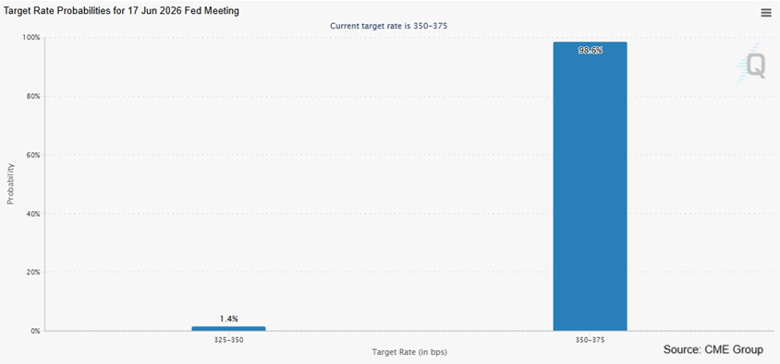
One reason the Fed should not overreact is that the U.S. economy continues to grow rapidly.
The Atlanta Fed currently estimates that the U.S. will achieve 3.3% annual GDP growth in the second quarter. I suspect upward revisions to this number in the wake of positive ISM manufacturing and service sector data, as well as robust retail sales.
So, the U.S. economy could grow at a 5% to 6% annual pace in the third quarter.
The bottom line: The U.S. remains an economic oasis, and I still expect the Fed to cut key interest rates later this year. That, coupled with a phenomenal earnings environment, should help set us up for a very prosperous year.
But that does not mean every stock is a buy. It means you have to be selective.
Watch This Before Midnight Tonight
That’s why I recently sat down with TradeSmith CEO Keith Kaplan to reveal what I believe could be the most important upgrade to Stock Grader since I created it.
Keith and I revealed a new AI-powered approach that takes the power of Stock Grader and adds a short-term timing signal – designed to help investors identify which stocks may have the strongest upside potential right now, and which ones may be flashing warning signs.
In a market where global conflict, Fed uncertainty and energy prices can push stocks around fast, this upgrade could be extremely valuable for investors who want to navigate the uncertainty.
Go here to watch the replay before it’s taken down at midnight tonight.
Sincerely,

Louis Navellier
Editor, Market 360
5 Stocks Our Experts Predict Could Double In the Next Year
By submitting your email, you'll also get a free pivot & flow membership. A free daily market overview. You can unsubscribe at any time.