Key Points
-
After completing the largest IPO of all time back in June, SpaceX stock is now down 34% from its peak.
-
The company has a $28.5 trillion market opportunity, the bulk of which sits in artificial intelligence (AI) ambitions.
-
The stock could rise over the next several years, but execution in new markets and profitability are key.
- 10 stocks we like better than Space Exploration Technologies ›
If you invested $10,000 into Space Exploration Technologies (NASDAQ: SPCX) today and left it alone until 2030, you would not be buying the same story from the company’s initial public offering (IPO) in June. Shares of SpaceX (as the company is also known) opened on the Nasdaq around $150, implying a $1.77 trillion market cap at the time. This debut made Elon Musk’s industrial complex one of the most valuable companies in the world from the get-go.
After months of volatility, and even briefly eclipsing Amazon and Microsoft in market value, the stock now trades back at roughly its opening-day price. Even though shares are 34% off from their high, it’s far from a broken business. There is actually a lot to like if you can live with the valuation.
Missed Nvidia in 2009? This Rare Signal Is Flashing Again. In 2009, a “Double Down” signal flashed for a little-known chipmaker called Nvidia. For the first time in years, that same “Total Conviction” signal is flashing for a company 1/100th the size of Nvidia. Continue »
The question is not whether SpaceX is an interesting buy. It is whether investing in a company with a $2 trillion starting point leaves enough room for a meaningful investment to still matter by the end of the decade.
Why investors still care after the IPO sell-off
On paper, SpaceX’s public offering was historic. It wasn’t until gravity showed up that growth investors got a sour taste of reality. A stock that rips more than 50% from its opening price in just a few trading days usually gives some of the gains back. Spoiler alert: Shares plummeted as momentum traders booked easy gains.
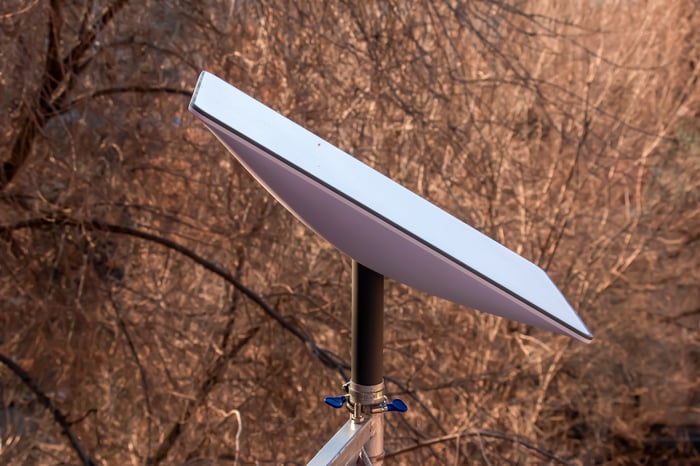
What did not go away is the company’s underlying product mix. Connectivity, which is headlined by Starlink, the satellite internet provider, generated $4.3 billion in sales during the second quarter — up about 66% year over year. What’s even more encouraging is that Starlink posted a positive operating profit. For now, connectivity is the only segment generating consistent profits for SpaceX.
Meanwhile, the space exploration division, which features the launch vehicles Falcon, Dragon, and the upcoming Starship, operates more as a research and development (R&D) factory rather than a cash machine. The space business generated $962 million in revenue during the second quarter, with operating losses growing from $369 million last year to $542 million in 2026.
Artificial intelligence (AI) is the opportunity Wall Street is really focusing on. This is the part of SpaceX that includes xAI, Grok, leased computing capacity, and Cursor. During the second quarter, its AI business nearly tripled to $2.6 billion in revenue. However, this build-out consumes a lot of cash. Through the first six months of 2026, the AI segment lost $3.7 billion.
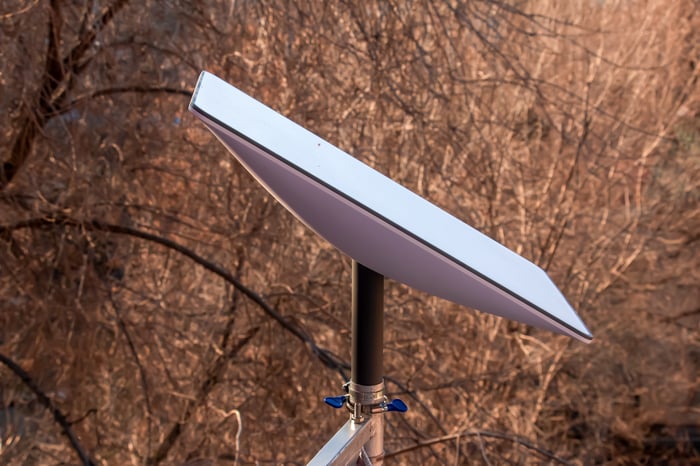
Image source: Getty Images.
Breaking down the $28.5 trillion total opportunity
SpaceX’s S-1 filing with the Securities and Exchange Commission slapped a $28.5 trillion total addressable market (TAM) across the company’s three main divisions, calling it the largest actionable market in history. Ironically, almost none of it relates to rockets.
Management places space-enabled solutions into a $370 billion category. Meanwhile, it sees connectivity reaching $1.6 trillion — split between $870 billion for broadband and $740 billion mobile. The remaining $26.5 trillion was allocated for AI in enterprise apps, infrastructure, consumer subscriptions, and ads.
Here’s the big picture: This TAM map is ambitious, not a purchase order. Ambition is expensive. SpaceX had about $20.7 billion in capital expenditures (capex) in 2025, followed by roughly $28.5 billion during the first half of 2026. The majority of the company’s infrastructure spending was on AI development.
This is behavior akin to the hyperscalers. Microsoft, Amazon, Alphabet, Meta Platforms, and Oracle are on pace to spend almost $800 billion on capex just this year alone. SpaceX is trying to join this club but with far less mature earnings.
The company’s balance sheet had about $100 billion in cash and marketable securities and $40 billion in debt following the IPO, but this cash will only cover the burn rate for a few years at its current pace. It does not cover a decade of accelerating investment for orbital factories and gigawatts of computing capacity.
This implies SpaceX cannot wait around to turn a consolidated profit. More debt could very well be on the table, as could a new share sale.
How much could SpaceX stock be worth by 2030?
If I start from SpaceX’s own near-term forecast of a $100 billion annual recurring revenue (ARR) run rate by year-end, the company could feasibly reach Wall Street’s consensus 2030 targets, which fall anywhere between $330 billion and $470 billion.
I think a plausible base case sits in the middle: $400 billion of revenue in 2030. After applying a price-to-sales multiple for a mature, tech-enabled industrial business, say 10 times to 12 times, you get a $4 trillion to $4.8 trillion company. Based on today’s $2 trillion market cap, this implies gains of up to 140%. That would turn a $10,000 initial investment in the stock into $24,000.
Overall, SpaceX has the potential to become a multibagger over the next several years. With that said, smart investors should exercise patience and caution, understanding that no stock goes up in a straight line forever. While buying and holding SpaceX stock looks compelling, making life-changing wealth by 2030 is highly unlikely.
Should you buy stock in Space Exploration Technologies right now?
Before you buy stock in Space Exploration Technologies, consider this:
The Motley Fool Stock Advisor analyst team just identified what they believe are the 10 best stocks for investors to buy now… and Space Exploration Technologies wasn’t one of them. The 10 stocks that made the cut could produce monster returns in the coming years.
Consider when Netflix made this list on December 17, 2004… if you invested $1,000 at the time of our recommendation, you’d have $383,680!* Or when Nvidia made this list on April 15, 2005… if you invested $1,000 at the time of our recommendation, you’d have $1,382,954!*
Now, it’s worth noting Stock Advisor’s total average return is 937% — a market-crushing outperformance compared to 214% for the S&P 500. Don’t miss the latest top 10 list, available with Stock Advisor, and join an investing community built by individual investors for individual investors.
*Stock Advisor returns as of September 29, 2026.
Adam Spatacco has positions in Alphabet, Amazon, and Microsoft. The Motley Fool has positions in and recommends Alphabet, Amazon, Meta Platforms, Microsoft, and Oracle. The Motley Fool has a disclosure policy.
5 Stocks Our Experts Predict Could Double In the Next Year
By submitting your email, you'll also get a free pivot & flow membership. A free daily market overview. You can unsubscribe at any time.