Investors looking for high-growth AI infrastructure opportunities have likely watched the recent volatility in with a mix of intrigue and anxiety. The central question is whether Supermicro’s recent decline represents a warning sign or a buying opportunity.
By understanding how physical data center bottlenecks are shifting, investors can see where real value accumulates in the hardware stack. The physical limits of silicon compute are no longer defined solely by transistor density; thermal dissipation has become a primary operational bottleneck.
As hyperscalers deploy next-gen architectures, the companies that can deliver pre-built, liquid-cooled infrastructure at scale are changing roles. They’re no longer just assembling hardware; they’re becoming essential system architects.
And that change is exactly why Supermicro’s recent financing pressures have opened up an unusual gap between the stock’s price and its underlying business.
How Supermicro Defeated the Post-Offering Freeze
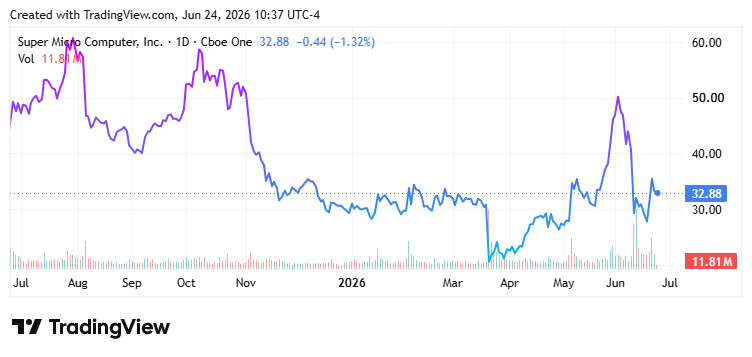
On June 11, 2026, Super Micro Computer, Inc. priced a massive $7 billion concurrent offering of common stock and mandatory convertible preferred stock. Short-term traders reacted with panic, triggering a 15% dilution-driven selloff that shaved 28% off the market price.

However, this immediate knee-jerk reaction missed the operational reality driving the capital raise. Securities and Exchange Commission (SEC) filings reveal that Supermicro is utilizing these net proceeds to procure critical components for a colossal $39 billion in active AI server orders. This backlog represents high-conviction commitments from over 20 major hyperscale customers.
The capital expansion doesn’t signal financial distress; instead, it secures the supply chain runway needed to fulfill unprecedented physical demand. Recognizing this mismatch, analysts at GF Securities upgraded Supermicro from a Hold to a Buy rating on June 22, 2026, setting a target price of $48. This upgrade suggests the market has fully absorbed the dilution, clearing the path for Supermicro to convert its massive inventory backlog into record-breaking revenue in the second half of the year.
Freezing Out Rivals With Turnkey Thermal Blueprints
At the ISC High Performance conference in Hamburg on June 22, Supermicro introduced its new Data Center Building Block Solutions (DCBBS) blueprint. The platform integrates up to 1,152 Rubin GPUs and 576 Vera CPUs based on the new NVIDIA Vera Rubin NVL4 architecture.
The engineering breakthrough lies in the thermal management system. The blueprint deploys DLC-2 Direct Liquid Cooling technology, supporting 362 kW per rack. Utilizing direct-to-chip copper cold plates, vertical manifolds, and specialized SMC PG25-A coolant, the system prevents the thermal throttling that degrades performance in high-density server farms.
Competitor is targeting this space with the PowerEdge XE8812, which scales to 144 GPUs per rack. However, Supermicro maintains a speed-to-market advantage. Global assembly facilities perform full system-level and cluster-level testing prior to shipment. This integration reduces the time-to-online for supercomputing centers, transforming Supermicro’s business relationship with hyperscalers from simple hardware acquisition into long-term infrastructure architecture.
Chill Valuation: Why Supermicro’s Earnings Growth Is Too Hot to Ignore
Supermicro’s valuation has compressed to an attractive level. The company trades at a trailing price-to-earnings (P/E) ratio of 18x and a forward P/E of 16x. This stands in stark contrast to its fundamental growth trajectory, as Supermicro reported a year-over-year (YOY) revenue increase of 122.7% in its latest quarterly earnings report.
This severe valuation gap has caught the attention of institutional option traders. On June 22, option volume spiked to 583,277 contracts, with call options accounting for 81.1% of the total. Buyers focused heavily on the $40 strike call options expiring on June 26, 2026, signaling expectations for a rapid upward move.
Simultaneously, short sellers are beginning to capitulate.
Short interest has declined from 81.2 million shares to 74.5 million shares, though it still represents 14.39% of the free float. Any positive earnings surprise could easily trigger a violent short squeeze. It’s a setup that mirrors the dynamic at NVIDIA, which trades at an attractive forward P/E of roughly 23x despite growing its revenue by 85% YOY. The temporary weakness in both equities presents a highly favorable risk-reward profile for growth-oriented investors.
Balancing Liquid Growth Against Competitive Friction
While the growth story is compelling, prudent investors must weigh several structural risk factors before allocating capital. The competitive landscape intensifies as Dell and aggressively expand their direct liquid-cooled offerings. Dell recently generated $16 billion in AI server revenue in a single quarter, proving it possesses the scale and balance sheet to compete on price.
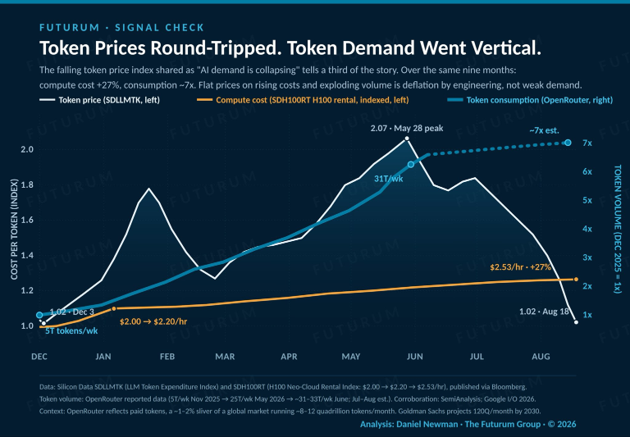
Supermicro also faces persistent margin compression. Its gross margin is 8.39%, reflecting the high cost of sourcing advanced graphics processing units (GPUs). A massive operational cash burn of $6.6 billion underscores the capital-intensive nature of this expansion cycle. Meanwhile, NVIDIA deals with short-term headwinds, including a copyright lawsuit filed on June 22, 2026, by music platform Jamendo, and minor price compression in cloud GPU rental rates. Navigating these risks requires focusing on companies with rapid inventory turnover and superior manufacturing execution.
Cold Calculations: Capitalizing on the Coolest Turnkey Play in AI
The transition toward liquid-cooled AI infrastructure is an ongoing trend, not a short-term hype cycle. By securing $7 billion in capital to fulfill a $39 billion order book, Supermicro is aggressively positioning itself to capture dominant market share. Investors with a higher risk tolerance might consider adding Supermicro to their watchlists as short-term dilution pressures continue to fade. Those seeking a more conservative entry point may prefer to build a gradual dollar-cost averaging position to mitigate short-term macro volatility while participating in the long-term expansion of the accelerated compute economy.
5 Stocks Our Experts Predict Could Double In the Next Year
By submitting your email, you'll also get a free pivot & flow membership. A free daily market overview. You can unsubscribe at any time.