The rose 64 basis points on the day, though there is still little to say about the current state of the market. The technology sector lagged the broader index, with the Technology ETF gaining just 22 basis points. At this point, the XLK is little more than a proxy for NVIDIA (NASDAQ:), Apple (NASDAQ:), and Microsoft (NASDAQ:), with those three stocks accounting for roughly 40% of the ETF.
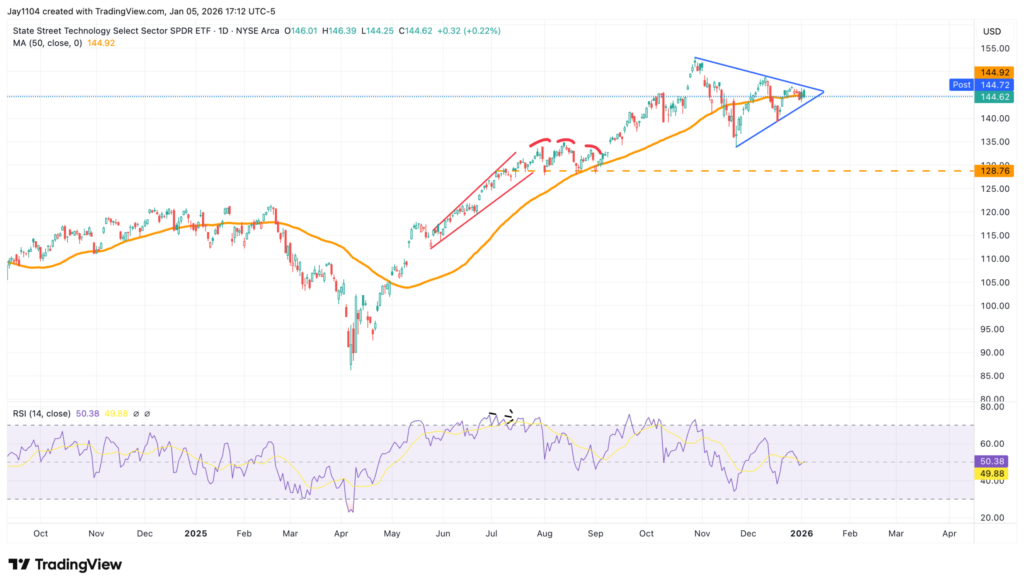
Looking at XLK more broadly, the sector has been largely stagnant over the past few weeks, effectively consolidating within a triangle pattern. As a result, the next move for the group is highly uncertain and could break in either direction.
The problem, of course, is that Apple shares fell by more than 1% on Monday and dropped below their 50-day moving average for the first time since July. The technical damage could worsen if the stock breaks below the $265 support level.
Microsoft, on the other hand, has been trading below its 50-day moving average for some time and is now also below its 200-day moving average. Support around $470 appears to be pretty important as well.
I would guess that if these stocks do not recover quickly, the technology sector will have a tough time moving higher if roughly 25% of the group’s weighting is not participating positively. It is something to keep in mind over the coming days as this plays out.
In the meantime, I still expect implied volatility to rise heading into the jobs report on Friday and the release on January 13. Volatility is too low at this point, and I would expect that to be reflected in the moving into the mid-teens, if not higher.
Bond market implied volatility rose on Monday, with the index climbing to 64.7, and, like equity market volatility, bond market volatility is also really low, especially given the events coming up on the calendar.
Meanwhile, the weaker led to the spread between and narrowing further, with the 5-year spread now at 2.11%, its lowest level since March 2022. Yet continues to hold near the 155 area.
5 Stocks Our Experts Predict Could Double In the Next Year
By submitting your email, you'll also get a free pivot & flow membership. A free daily market overview. You can unsubscribe at any time.